
Introduction – Why Marketing Automation Is No Longer Optional in 2026
In 2026, you’re not just competing against other businesses for attention; you’re competing against the collective noise of the digital world, where a potential customer’s patience lasts less than three seconds. Marketing Automation Strategies have become the defining factor between brands that respond instantly and scale smoothly, and those that feel slow, manual, and easy to ignore. If your marketing still relies on one-off emails, delayed follow-ups, or generic messaging, you’re not just behind; you’ve already lost the race.
From 2020 to 2026, buyer behavior has shifted fundamentally and subtly. Customers now expect relevance as standard, quick responses across various channels, and personalized experiences, even when automation is used. Meanwhile, companies face an increasing number of touchpoints, uchpoints including websites, email, SMS, WhatsApp, social media, ads, and CRMs. Managing all these manually not only hampers growth but also leads to inconsistency, missed opportunities, and staff burnout.
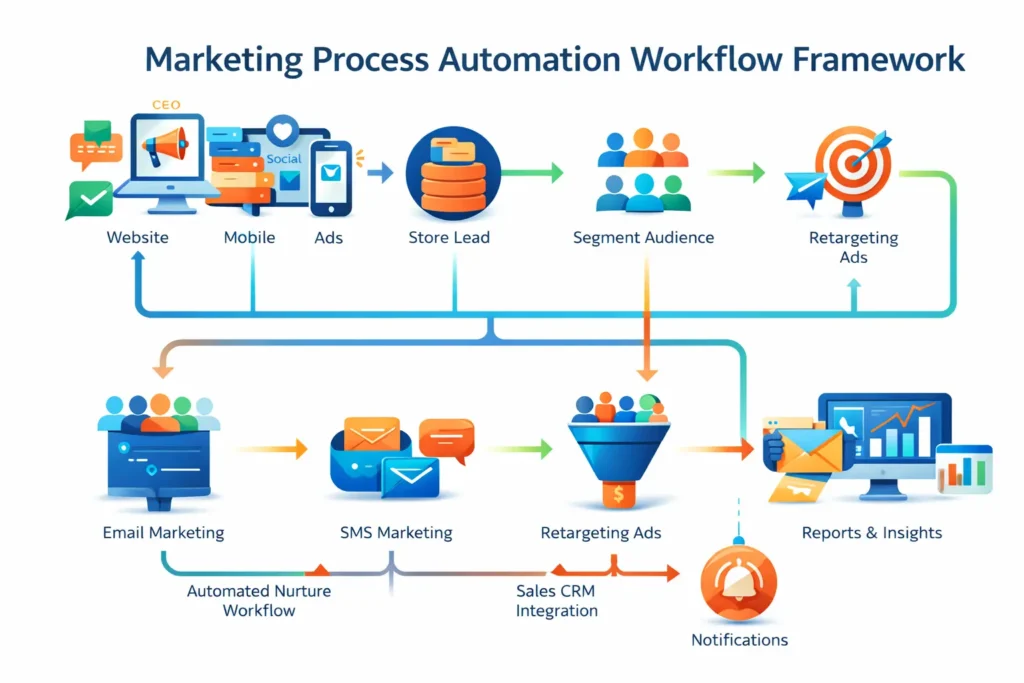
This is why modern marketing automation strategies are no longer about convenience. They are about survival, scalability, and staying competitive in an environment where speed, personalization, and timing matter more than ever.
What Is Marketing Automation? (Simple Explanation for Beginners)
Marketing automation is the use of software to automate repetitive marketing tasks, so your marketing system continues to run even when you’re not actively managing it. Instead of manually sending emails or reminders, automation follows rules and behavior.
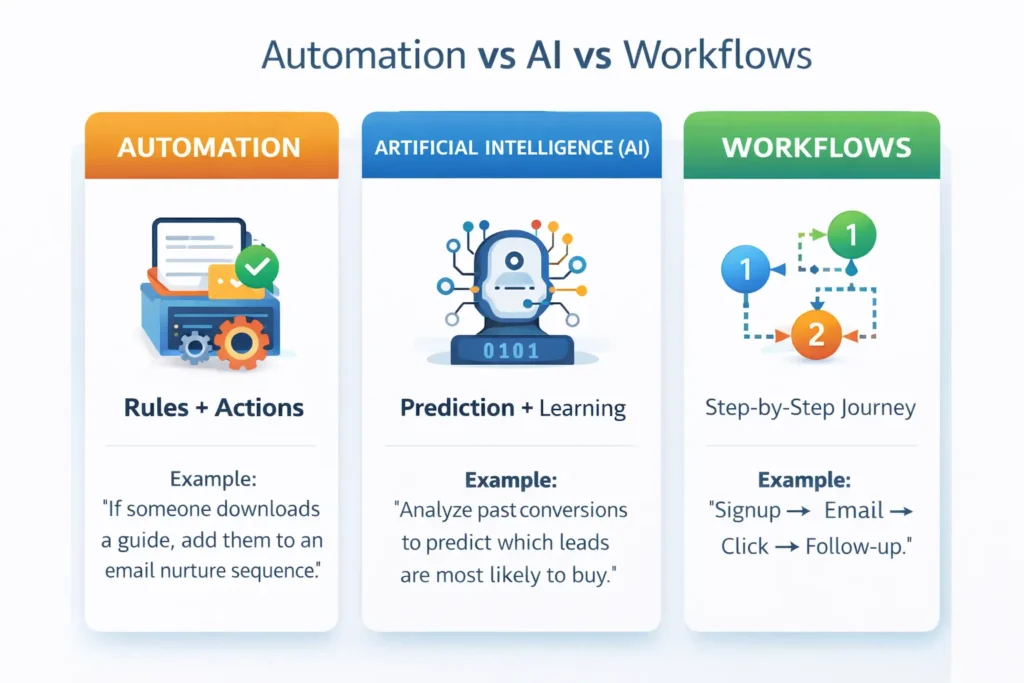
To avoid confusion, let’s clarify three standard terms:
- Automation focuses on rules and actions
Example: “If someone downloads a guide, add them to an email nurture sequence.” - AI (Artificial Intelligence) focuses on learning and prediction
Example: “Analyze past conversions to predict which leads are most likely to buy.” - Workflows are the step-by-step journeys users follow
Example: “Signup → Email → Click → Follow-up.”
A common myth is that automation makes brands feel robotic. In reality, well-designed marketing automation strategies eliminate repetitive tasks, making messaging feel more human and relevant. Another myth is that automation is only about email. In practice, automation can power websites, ads, SMS, social media, CRMs, and even internal sales workflows.
How Marketing Automation Strategies Drive Faster Growth
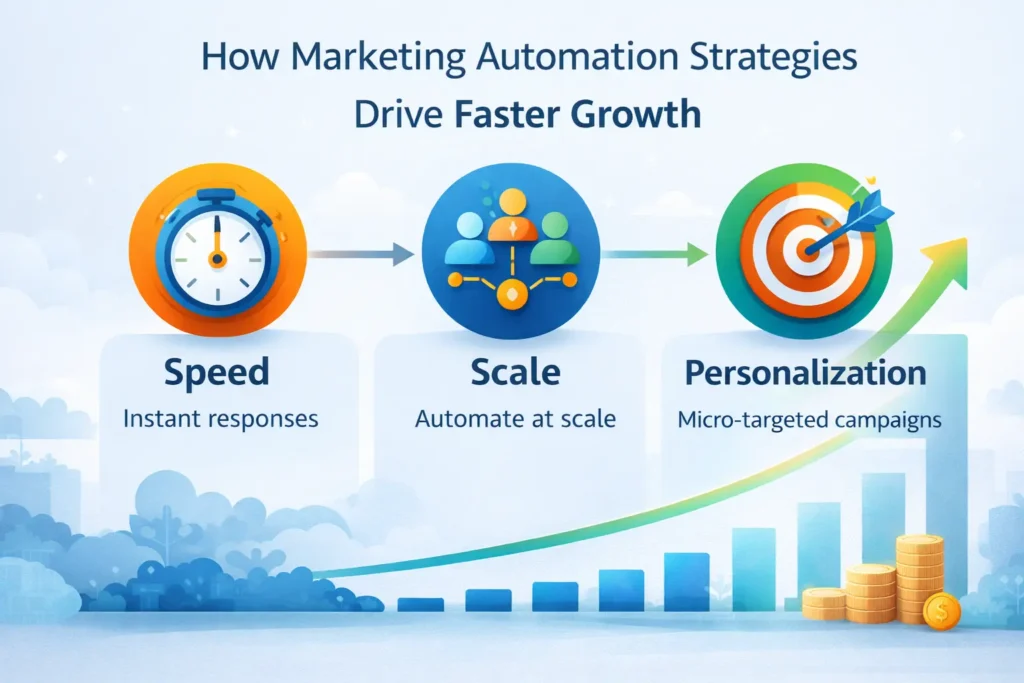
The impact of automation comes from three core growth drivers: speed, scale, and personalization.
- Speed: When a lead visits your pricing page at midnight, automation can respond within minutes via email or SMS while intent is high.
- Scale: You can nurture 10 or 10,000 leads using the same system, turning marketing into a predictable growth engine.
- Personalization: Automation enables micro-targeting based on behavior, not guesswork.
A strong B2B marketing automation strategy, for example, ensures that every lead from first visit to sales handoff receives relevant education without slipping through the cracks.
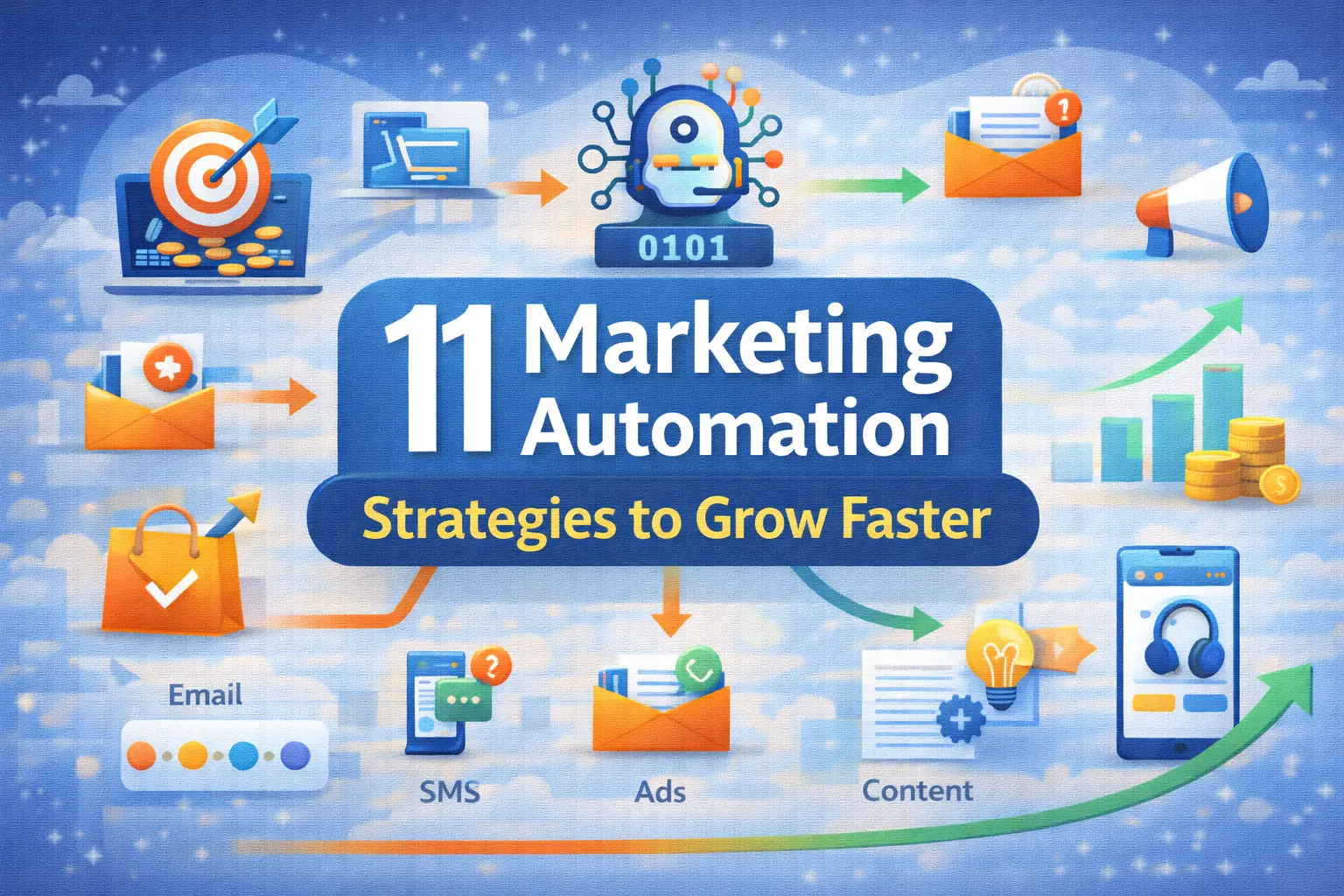
11 Marketing Automation Strategies
Strategy #1 – AI-Powered Lead Scoring for B2B Automation
Traditional lead scoring assigns fixed points: +10 for an ebook, +5 for a pricing visit. This approach fails because it ignores context.
Why Traditional Lead Scoring Fails
Not all actions mean the same thing. A technical case study, when viewed by the right company, can signal stronger intent than multiple blog visits.
How AI Improves Lead Quality
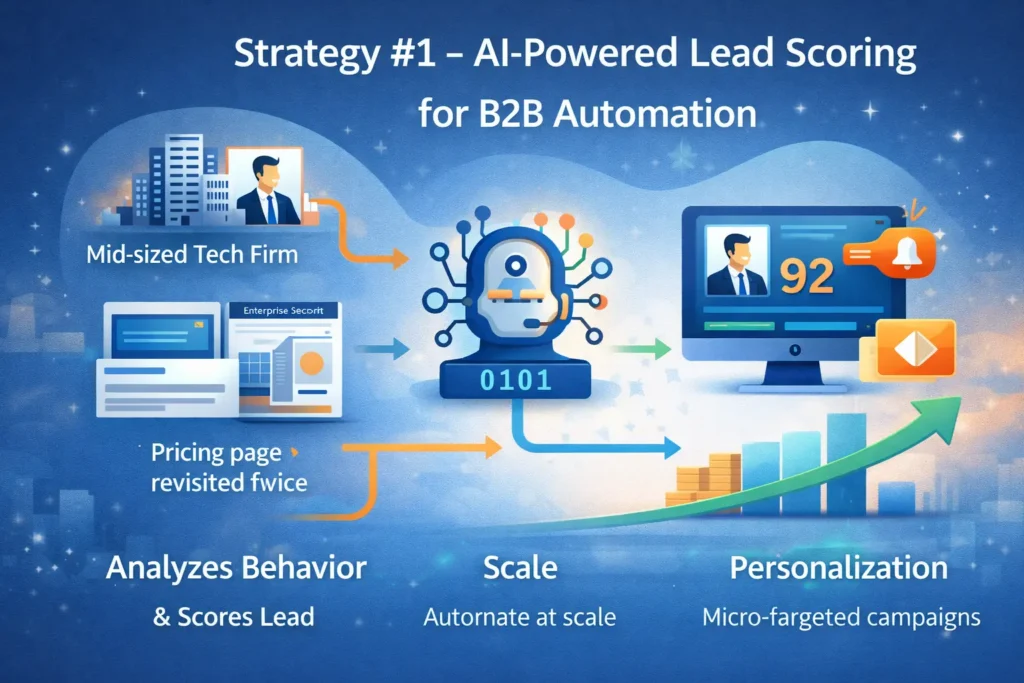
AI-based scoring analyzes historical data to identify patterns that lead to conversions. It continuously updates the lead priority based on behavior.
Example:
A SaaS company flags a lead from a mid-sized tech firm that downloaded an enterprise security report and revisited pricing twice. The system automatically prioritizes this lead for immediate sales outreach.
This approach is increasingly central to advanced b2b marketing automation strategies.
Strategy #2 – Behavior-Based Email Marketing Automation Strategy
Static email sequences send the same messages regardless of engagement. A behavior-based email marketing automation strategy adapts in real time.
Static vs Dynamic Email Sequences
- Static: Email A → Email B → Email C (fixed timing)
- Dynamic: Email paths change based on clicks, opens, and page visits
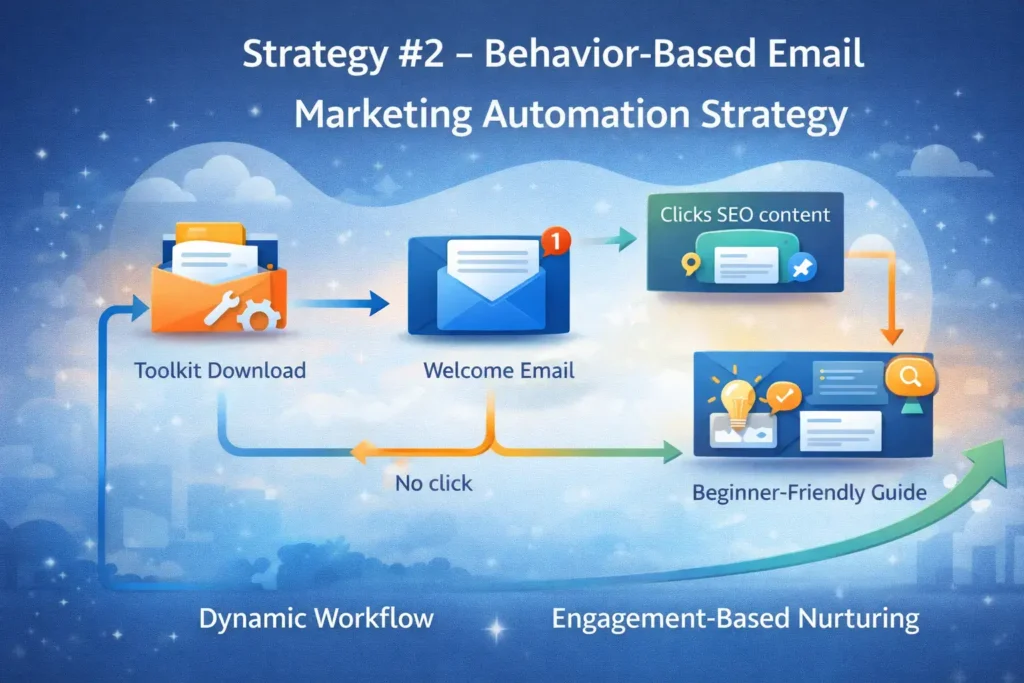
Workflow example:
- User downloads a toolkit
- Welcome email sent immediately
- If the user clicks SEO content → advanced SEO emails
- If no click → beginner-friendly guide
This type of email marketing automation strategy improves engagement by staying relevant.
Strategy #3 – Omnichannel Automation Strategies (Email + SMS + WhatsApp)
Customers don’t live in one channel. An omnichannel approach integrates email, SMS, and messaging apps into a single experience.
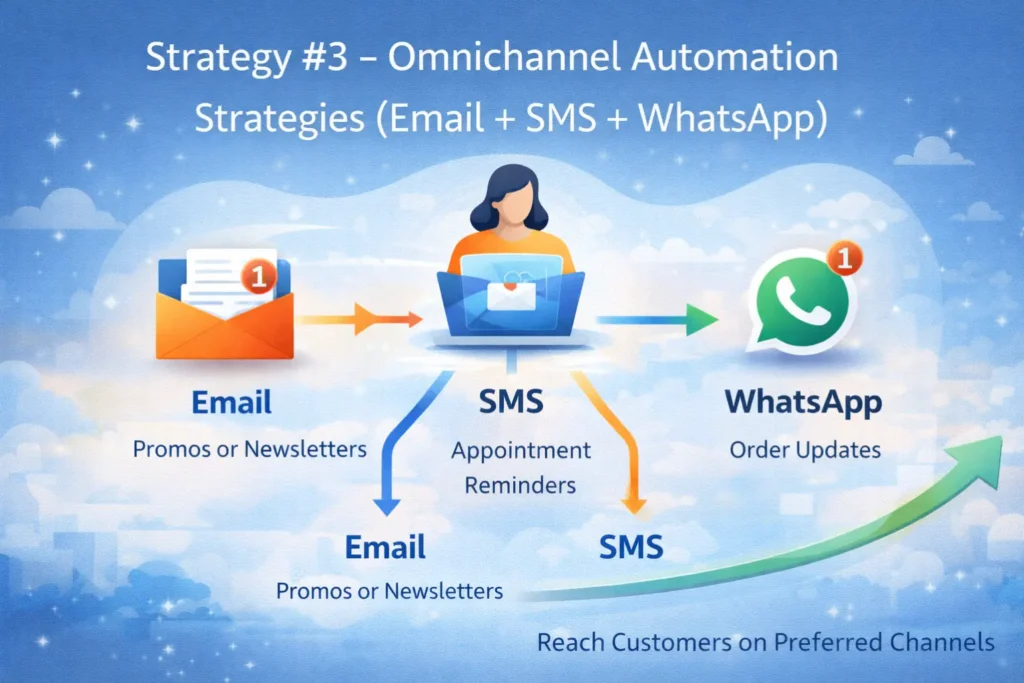
- Email handles education and nurturing.
- SMS handles urgency and reminders.
- WhatsApp handles conversations and confirmations.
For example, many local businesses use SMS marketing automation strategies to confirm appointments and reduce no-shows, while WhatsApp is used to send forms or follow-ups.
Strategy #4 – Automated Content Personalization at Scale
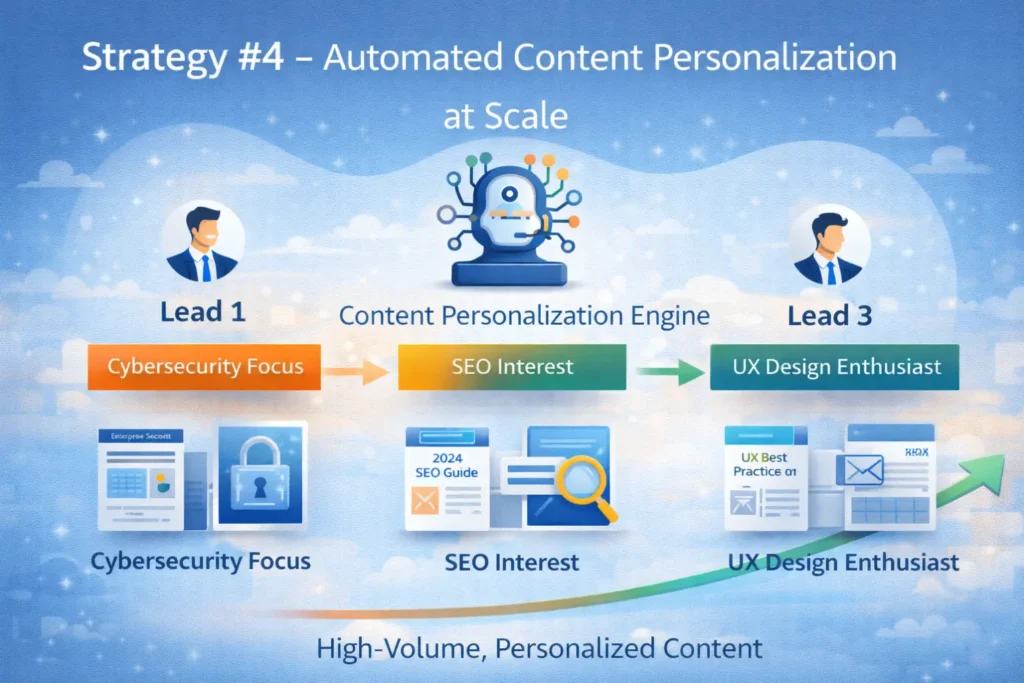
Personalization is no longer optional. Dynamic content adapts messaging based on user behavior and profile data.
Use cases:
- Returning visitors see industry-specific headlines.
- Enterprise readers see demo CTAs, beginners see trials.
This approach is a core part of a scalable marketing automation content strategy, increasing relevance without creating dozens of separate pages.
Strategy #5 – CRM-Centric Marketing Automation Strategy
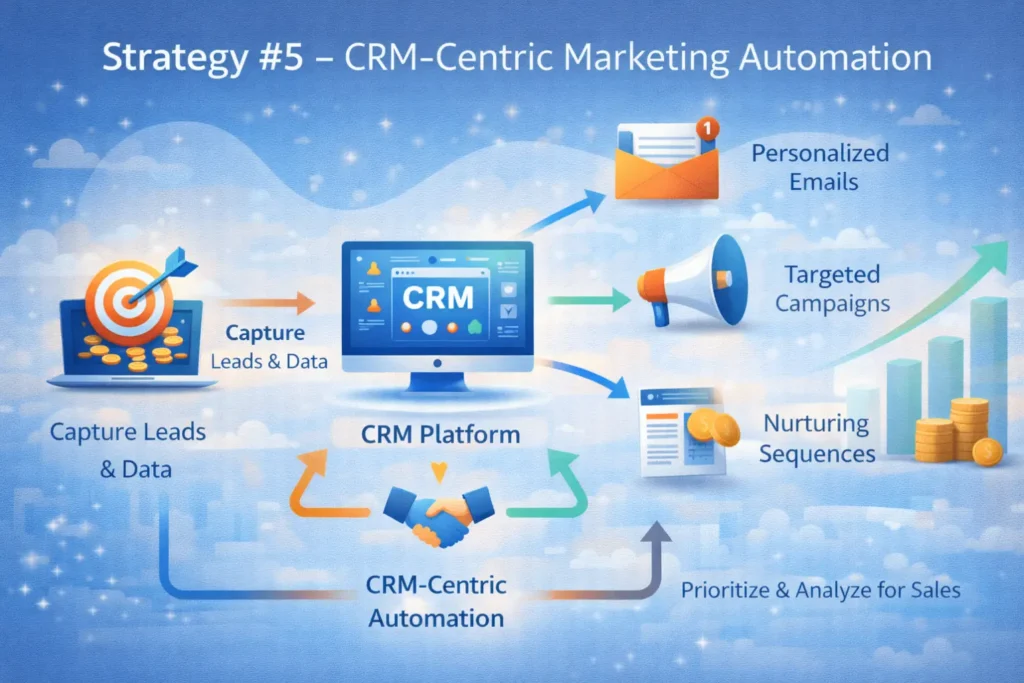
A CRM should act as the central brain of automation.
When marketing and sales share one system:
- Sales sees full engagement history.
- Marketing pauses messages during active sales conversations.
This alignment is essential to any serious B2B marketing automation strategy and helps prevent conflicting communication.
Strategy #6 – Predictive Customer Journey Automation
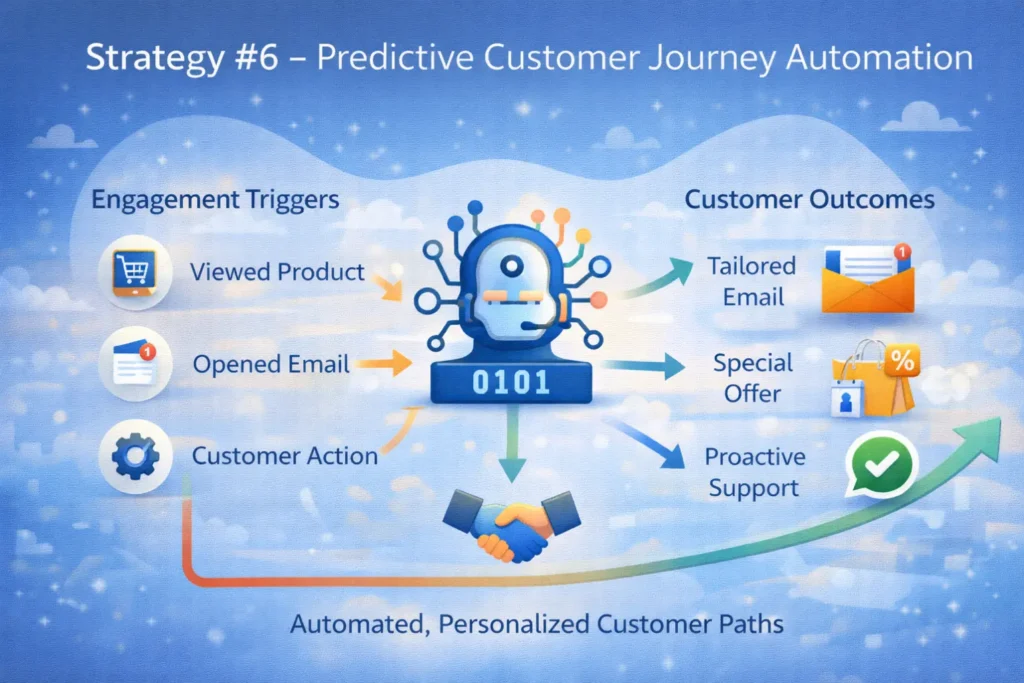
Customers don’t move linearly through funnels. Predictive automation uses behavior patterns to anticipate next steps.
Example:
Users who read comparison content and attend webinars often request demos soon. Automation can trigger demo invitations and relevant case studies at the right moment.
Strategy #7 – Automated Retargeting & Ad Sync
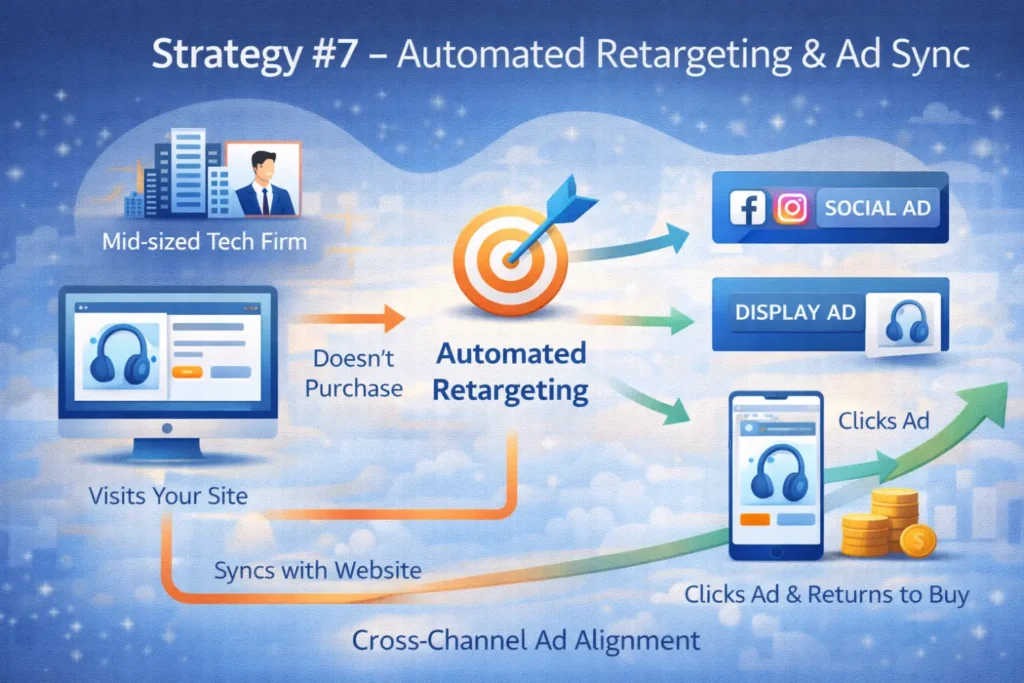
Automation platforms can sync CRM data with ad networks.
Instead of retargeting all visitors, you can:
- Show ads only to pricing-page visitors.
- Exclude existing customers.
- Create lookalike audiences from high-value buyers.
This precision makes retargeting far more efficient.
Strategy #8 – E-commerce Marketing Automation for Repeat Sales
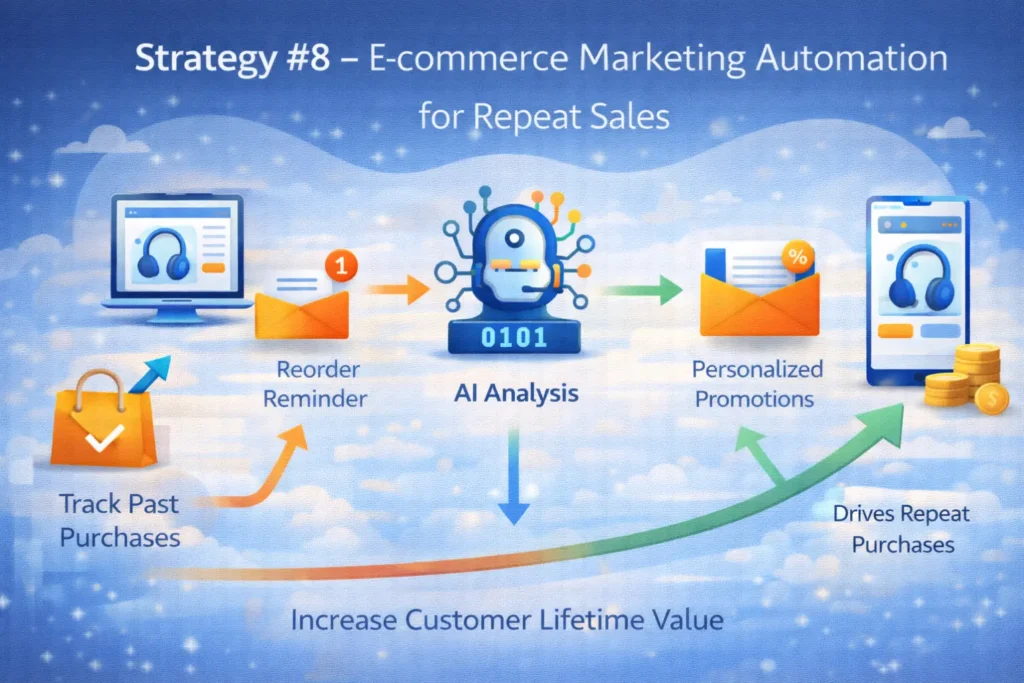
In e-commerce, automation focuses heavily on retention.
Typical workflow:
- Order confirmation (email/SMS).
- Review request.
- Usage tips.
- Cross-sell recommendations.
- Win-back offers.
This system automatically turns one-time buyers into repeat customers.
Strategy #9 – Social Media Automation & DM Funnels
Social automation isn’t just scheduling posts; it’s about automating lead capture.
Example:
A user comments, “Price?” on Instagram. Automation sends a DM asking qualifying questions and offering a booking link. Responses sync to CRM for follow-up.
Strategy #10 – CRO Automation to Increase Conversions
Conversion Rate Optimization (CRO) benefits heavily from automation.
- Automated A/B testing continuously tests headlines and layouts.
- AI tools analyze heatmaps and behavior to identify friction.
This removes guesswork and improves conversions over time.
Strategy #11 – Analytics & Revenue Attribution Automation
Automation should answer one question: What actually makes money?
Automated dashboards track:
- Cost per lead.
- Lead-to-customer rate.
- Customer lifetime value.
For agencies and MSPs, a managed services marketing automation strategy relies on these insights to prove ROI and optimize services.
Marketing Automation Workflow Examples (Real Use Cases)
Seeing a marketing automation strategy template helps, but real marketing automation workflow examples make implementation clearer.
- Lead magnet → email nurture.
- Demo request → automated sales follow-up.
- Inactive lead → re-engagement sequence.
These workflows show how marketing automation strategies work in practice.
How to Build Your Marketing Automation Stack for 2026
- Beginner stack: All-in-one tools (email + CRM + workflows).
- Advanced stack: Best-of-breed tools connected via integrations.
The right stack depends on team size, goals, and technical capacity.
Download the Marketing Automation Strategy Template
A practical marketing automation strategy template helps turn ideas into execution.
A good template usually includes:
- Goal-setting framework.
- Customer journey map.
- Workflow blueprints.
- KPI tracking outline.
This is especially useful when building a managed services marketing automation strategy or scaling internal operations.
Common Marketing Automation Mistakes to Avoid
- Automating broken processes.
- Over-automation without segmentation.
- Ignoring data hygiene.
- Removing human handoffs where empathy matters.
Future of Marketing Automation Beyond 2026
Automation is moving toward hyper-personalization, powered by zero-party data information that customers willingly share in exchange for better experiences. Systems will shift from reacting to predicting.
Conclusion
Successful marketing automation strategies in 2026 are not about tools alone. They are about designing intelligent, customer-centric systems that respond at the right moment with the right message. Whether you’re refining a b2b marketing automation strategy, improving an email marketing automation strategy, or implementing sms marketing automation strategies, start small and scale deliberately. Over time, these systems compound into faster growth, better conversions, and sustainable success.
FAQs – Marketing Automation Strategies
1. What are marketing automation strategies, and why are they essential in 2026?
Marketing automation strategies are systems that automate repetitive marketing tasks, such as email follow-ups, lead nurturing, and customer segmentation. In 2026, they’re critical because customers expect instant responses, personalized messaging, and consistent experiences across channels. Without automation, businesses struggle to scale and respond fast enough to buyer behavior.
2. How does a B2B marketing automation strategy improve lead quality?
A strong B2B marketing automation strategy improves lead quality by tracking behavior such as content engagement, pricing page visits, and email interactions. By using automation and AI-powered lead scoring, sales teams can focus on high-intent leads rather than wasting time on unqualified prospects.
3. What are some real marketing automation workflow examples for small businesses?
Common marketing automation workflow examples include:
Lead magnet download → email nurture sequence.
Demo request → automated sales follow-up reminders.
Inactive leads → re-engagement or win-back campaigns.
These workflows help small businesses save time while maintaining consistent communication.
4. How do email and SMS marketing automation strategies work together?
An effective email marketing automation strategy handles education and nurturing, while SMS marketing automation is best for urgent messages such as reminders, confirmations, or limited-time offers. When combined, they create a balanced omnichannel experience without overwhelming customers.
5. What is included in a marketing automation strategy template, and who should use it?
A marketing automation strategy template typically includes goal setting, customer journey mapping, workflow planning, tool selection, and KPI tracking. It’s beneficial for agencies building a managed services marketing automation strategy or businesses that want a clear, repeatable automation roadmap before investing in tools.