
INTRODUCTION
Tofu mofu bofu is the reason some businesses grow predictably while others struggle despite posting content, running ads, and “trying everything.” Most companies don’t fail because their offer is weak; they fail because they don’t have a clear marketing funnel that guides people from first contact to final decision. Without structure, marketing becomes random, expensive, and frustrating.
In today’s crowded digital space, attention is short, and trust is earned slowly. That’s why understanding how people think before they buy is more important than chasing the next tactic. A structured tofu mofu bofu funnel helps you match the right message to the right mindset at the right time, instead of pushing sales too early.
If you’ve ever wondered what is tofu mofu bofu or why some brands convert effortlessly. In contrast, others don’t. This guide will clear the confusion. You’ll learn how modern marketing funnels work, how buyer psychology shapes decisions, and how to use this framework to build consistent growth step by step, without complexity.
What Is a Marketing Funnel?
Simple Definition for Beginners
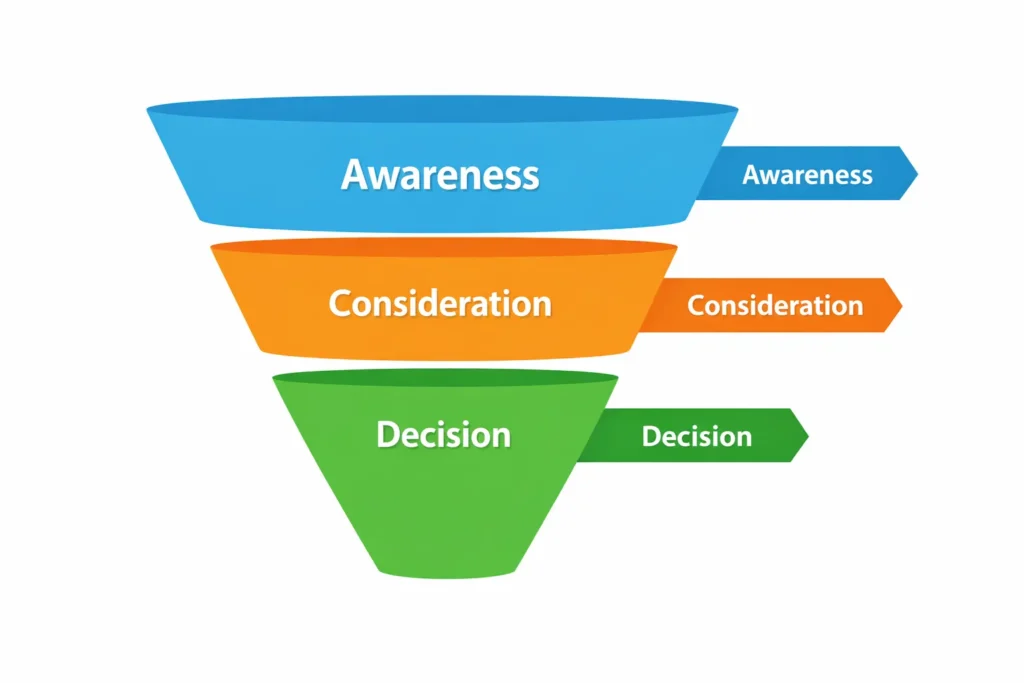
A marketing funnel is a step-by-step process that demonstrates how buyers go from discovering a company to becoming paying clients. Rather than trying to sell to everyone at once, a funnel allows you to guide people based on where they are in their decision-making process. In layperson’s terms, it addresses three questions: how people discover you, how they come to trust you, and how they ultimately decide to buy.
This approach is closely aligned with what tofu mofu bofu promotes, as both focus on connecting your message to the customer’s attitude at each stage. A well-structured marketing funnel tofu mofu bofu strategy makes marketing appear rational rather than arbitrary.
Why Marketing Funnels Matter Today
Today’s buyers don’t purchase instantly. They research, compare, and hesitate. A funnel matters because it provides structure for modern marketing behaviour, helps reduce wasted effort, and creates a smoother path from attention to conversion, especially in competitive digital markets.
The Psychology Behind a Marketing Funnel
Buyer’s Journey vs Marketing Funnel
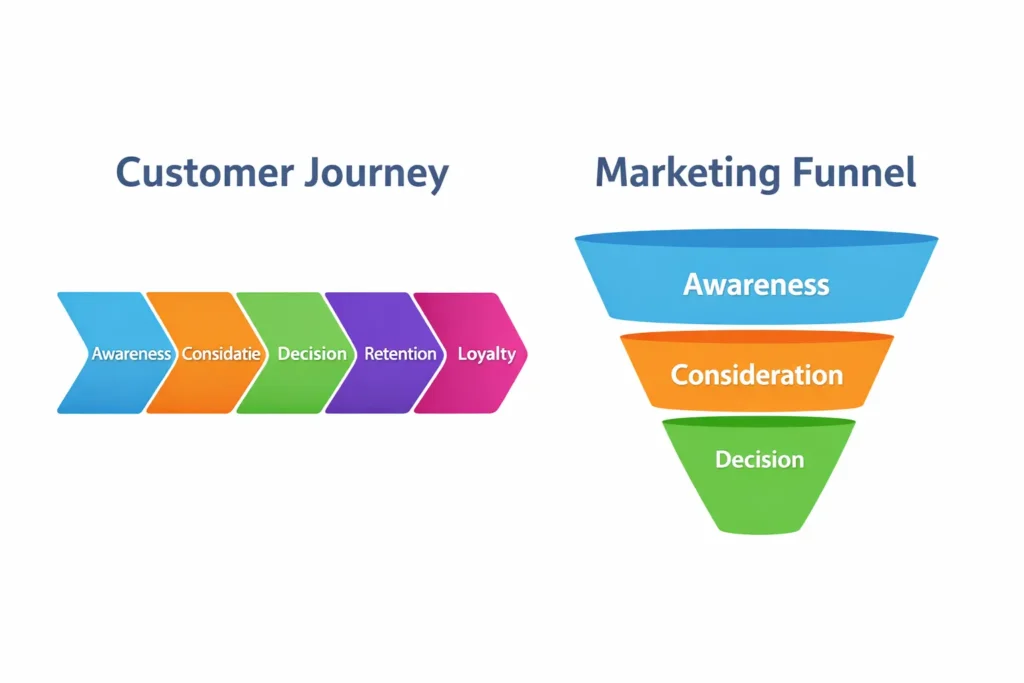
People don’t buy logically; they first buy emotionally, then justify it logically. That’s why understanding buyer psychology is critical when designing a funnel. A buyer’s journey describes what happens inside a person’s mind, while a funnel shows how your marketing supports that journey from the outside. In a well-structured marketing funnel, tofu mofu bofu, every message aligns with the buyer’s mental state rather than forcing a sale too early.
Awareness, Consideration, Decision Explained
At the awareness stage, people realise they have a problem but aren’t looking to buy yet. During consideration, they actively compare solutions and seek trust signals. Finally, at the decision stage, they choose the option that feels safest and most valuable. This psychological flow is precisely why the marketing funnel tofu mofu bofu framework works; it aligns marketing with how humans naturally think, not how businesses want to sell.
What Is TOFU, MOFU, BOFU?
Many beginners get confused when they first hear funnel terms, so let’s keep it simple. Tofu mofu bofu is a marketing framework that explains how people progress from discovering a brand to becoming customers. Instead of treating every audience the same, this model helps marketers communicate differently at each decision stage.
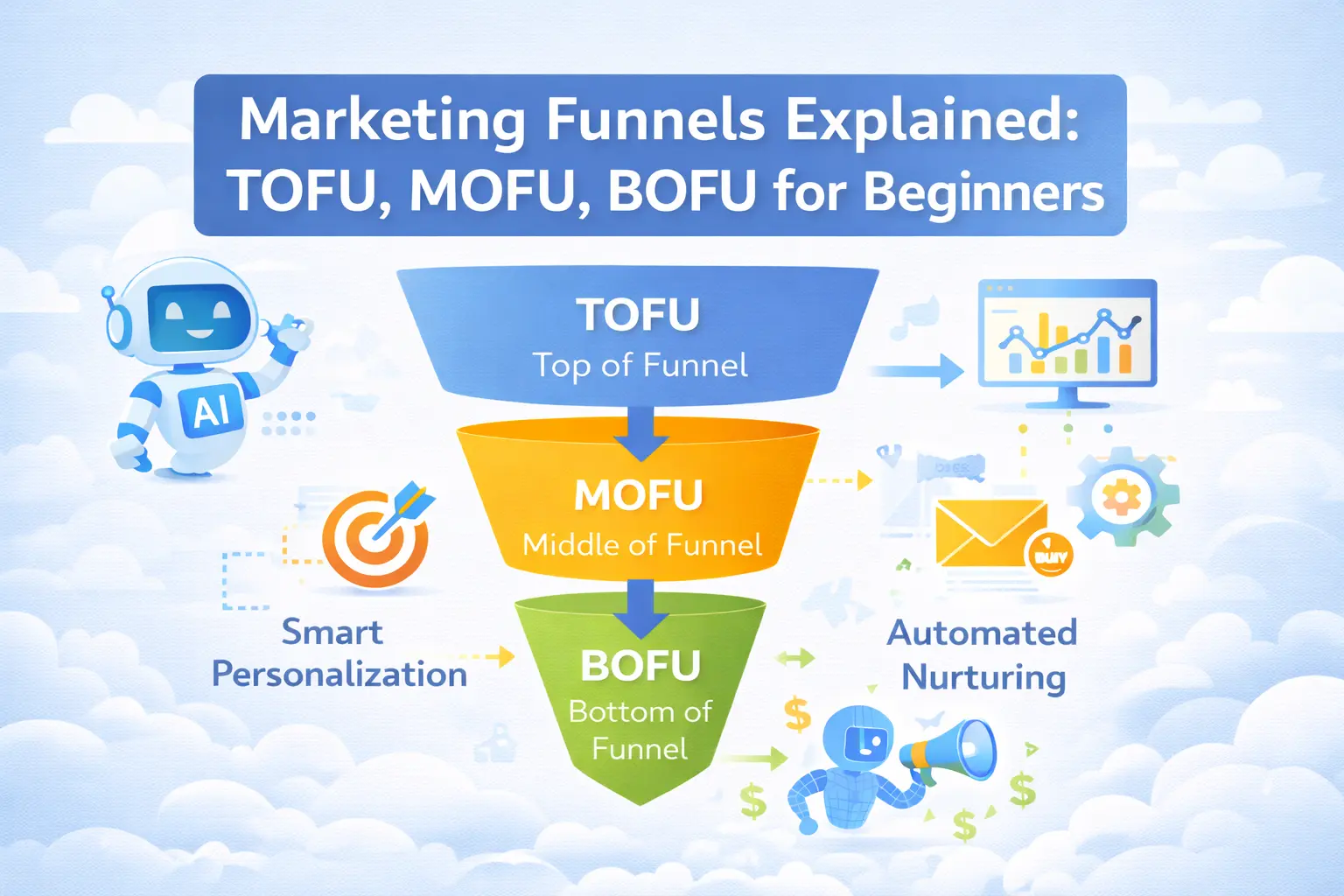
The complete forms are straightforward: TOFU means Top of the Funnel, MOFU means Middle of the Funnel, and BOFU means Bottom of the Funnel. Together, they describe the natural flow of attention, trust, and action. If you’ve ever asked what is tofu mofu bofu, the short answer is this: it’s a way to match your message with how ready someone is to buy.
The meaning of tofu mofu bofubecomes clearer when you see it as a customer journey rather than a sales trick. This framework is widely used in marketing funnels because it reduces guesswork, improves targeting, and makes communication feel helpful rather than pushy, especially in modern digital marketing.
TOFU, MOFU, BOFU Meaning Explained Simply
At its core, tofu mofu bofu is a simple way to understand how people move through a marketing funnel. Instead of pushing everyone to buy, this approach respects how buyers think and decide. Once you know the tofu mofu bofu meaning, marketing stops feeling confusing and starts feeling intentional.
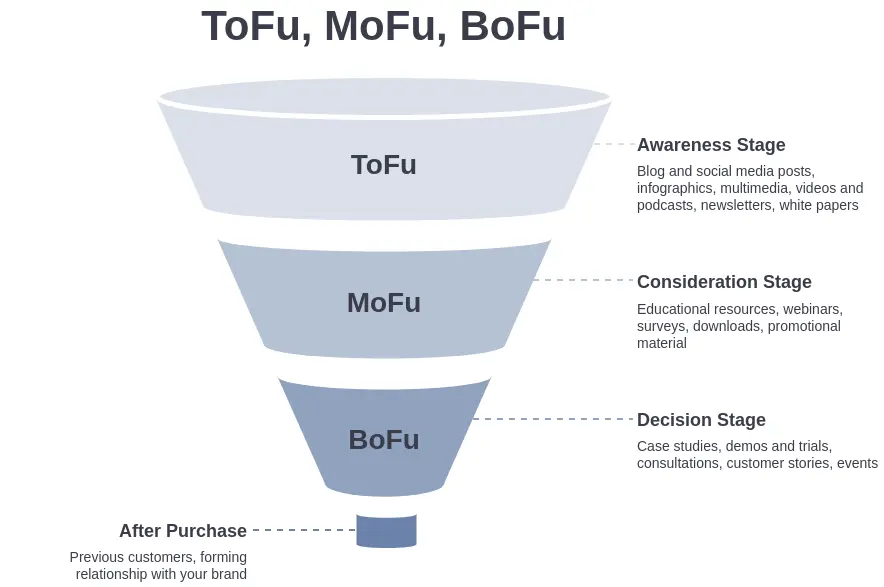
TOFU (Top of the Funnel)
Goal:Awareness
At the TOFU stage, people are just discovering a problem or learning that solutions exist. They are curious, not ready to buy. The mindset here is “I’m learning” rather than “I’m shopping.” In tofu mofu bofu marketing, this stage focuses on education and visibility.
Example content: blog posts, social media tips, short videos, beginner guides.
MOFU (Middle of the Funnel)
Goal:Consideration
In MOFU, people know they have a problem and are comparing options. Trust becomes the deciding factor. A smart tofu mofu bofu funnel uses this stage to nurture leads rather than rush the sale.
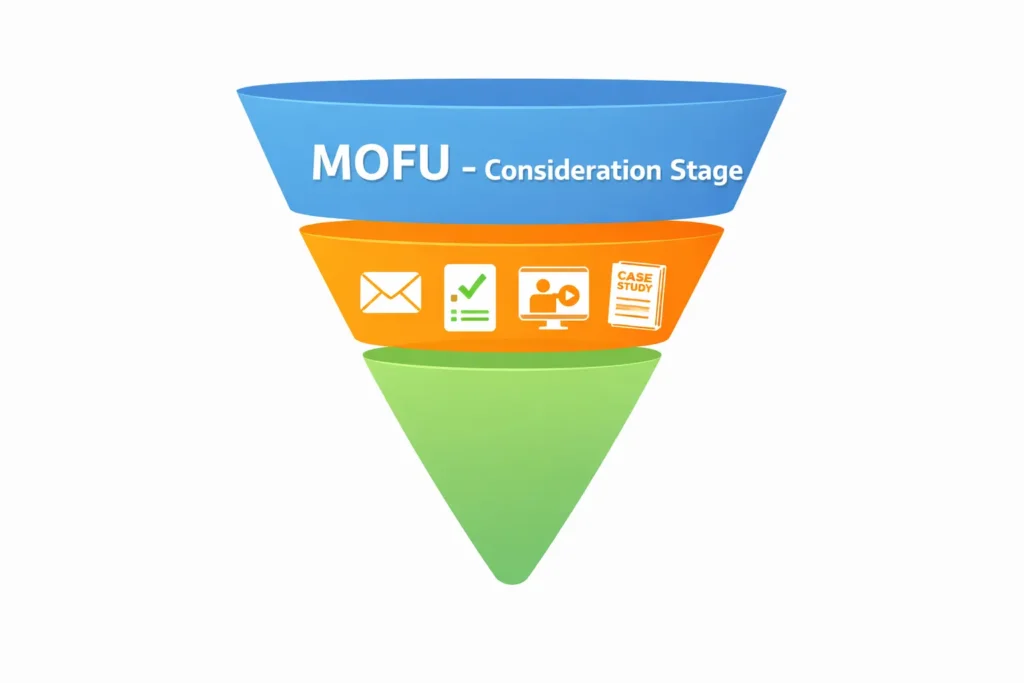
Example content: lead magnets, email sequences, webinars, case studies.
BOFU (Bottom of the Funnel)
Goal:Conversion
At BOFU, people are ready to make a decision. Their mindset is “Which option feels safest and most valuable?” This is where a clear offer and proof matter most in any marketing funnel tofu mofu bofu setup.
Example content: sales pages, demos, consultations, testimonials.
TOFU, MOFU, BOFU Funnel Explained
The tofu mofu bofu funnel shows how people gradually move from curiosity to confidence and finally to action. Instead of expecting instant sales, this funnel respects how real humans think and decide. At the top, many people enter with little awareness. As they move down, only those who feel understood and supported continue forward.
Users typically enter the funnel through content or ads, learn more through educational material, and then receive proof and offers when they’re ready. That’s why a well-designed tofu mofu bofu funnel doesn’t rush people; it guides them. Each stage naturally filters and qualifies the audience, saving both time and marketing budget.
Different stages require different messaging because people ask different questions at each point. Early on, they want clarity. In the middle, they want trust. At the bottom, they want certainty. This is the core idea behind tofu mofu bofu marketing, matching the message to the mindset.
A funnel is not the same as a customer journey. The customer journey describes what happens in the buyer’s mind, while the funnel shows how your marketing supports that journey step by step. Together, they create a smoother, more predictable path to conversion.
Marketing Funnel TOFU MOFU BOFU vs Traditional Funnel
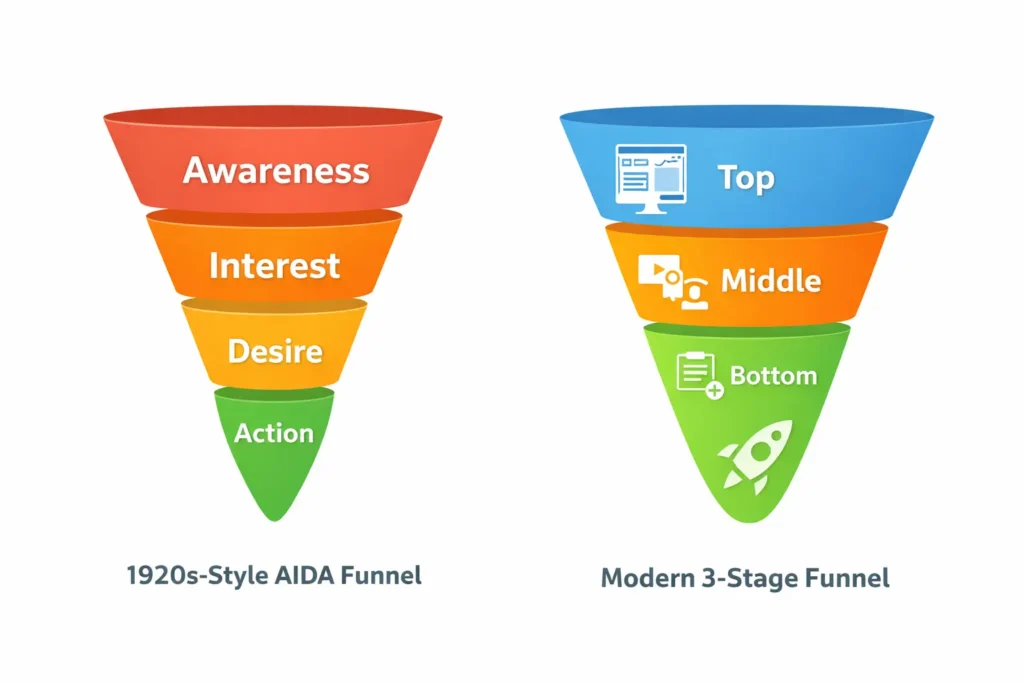
When people ask what is tofu mofu bofu, they are usually looking for a more agile way to guide customers toward a purchase. The traditional funnel was a linear, rigid path: Awareness, Interest, Desire, and Action (AIDA). However, modern tofu mofu bofu marketing recognises that today’s buyers don’t follow a straight line; they jump in and out of the process based on their own research.
The mofu bofu tofu strategy works better today because it focuses on the depth of the relationship rather than just on sales volume. Buyer behaviour has shifted significantly; 80% of the “shopping” happens before a customer even talks to a salesperson.
By using a marketing funnel tofu mofu bofu approach, you provide value at every stage. You aren’t just shouting at everyone to “buy now.” Instead, you use the tofu bofu mofu framework to educate the curious, assist the researchers, and finally convert the ready. This modern tofu mofu bofu funnel offers a personalised experience that builds the trust needed for long-term loyalty.
TOFU – Top of the Funnel Explained
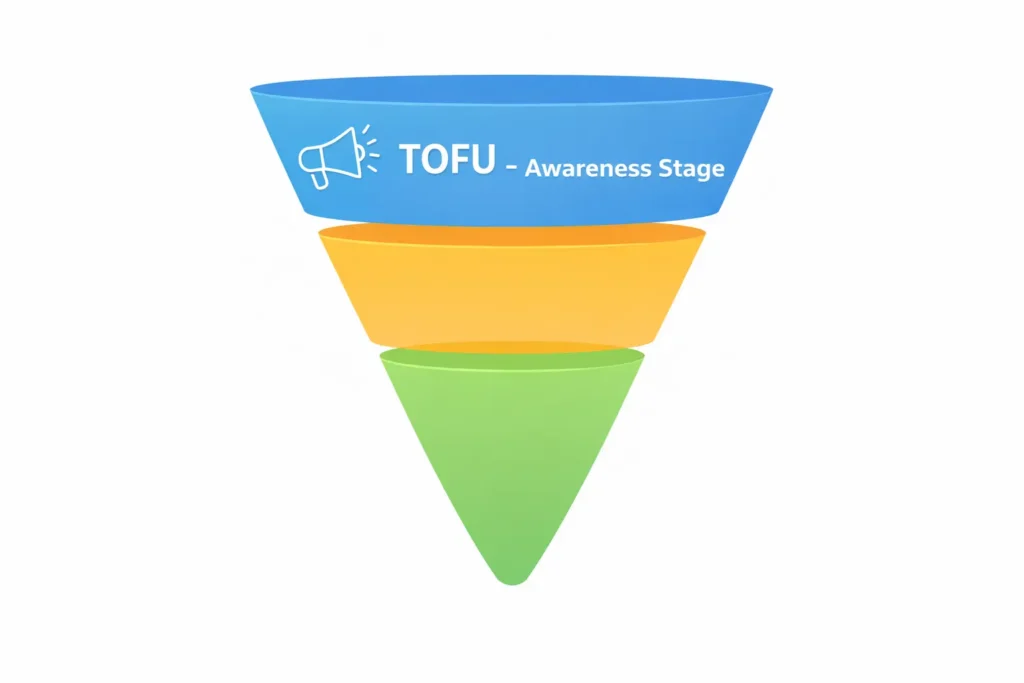
In the tofu mofu bofu framework, TOFU (Top of the Funnel) is where the relationship with your audience begins. This is the stage where people first discover your brand, often without any intention to buy. They are exploring, learning, and trying to understand a problem, not shopping yet. That’s why TOFU is all about visibility, education, and relevance.
What Happens at the TOFU Stage
At the TOFU stage, users are becoming aware of a problem or opportunity. They might be searching online, scrolling social media, or watching short videos. Effective tofu mofu bofu marketing at this point focuses on helpful information rather than promotion. The goal is to attract the right audience and spark interest, not to push an offer.
TOFU Audience Mindset
TOFU audiences think, “I’m just learning” or “I want to understand this better.” A well-planned tofu mofu bofu funnel respects this mindset by offering value and clarity instead of pressure.
Common TOFU Mistakes to Avoid
The biggest mistakes at TOFU are selling too early, being overly promotional, and failing to guide users to the next step. TOFU should build curiosity and trust, not demand commitment.
Best TOFU Marketing Strategies
At the TOFU stage, the goal is not conversion; it’s attention and relevance. In the tofu mofu bofu framework, strong TOFU strategies focus on educating people who are just becoming aware of a problem. When done right, TOFU creates trust and prepares users to move deeper into the funnel without pressure.
Content Types for TOFU
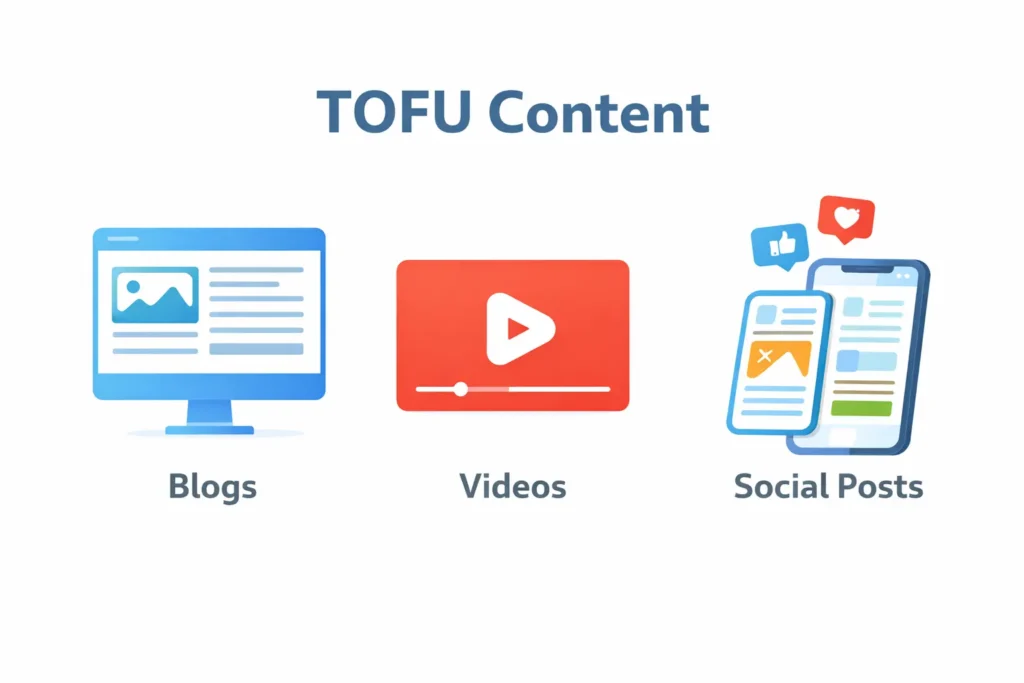
TOFU content should be simple, helpful, and easy to consume. This includes blog posts, short videos, social media tips, beginner guides, and explainer content. Effective tofu mofu bofu marketingcontent answers basic questions, explains common mistakes, and introduces ideas without pitching a product. The aim is to spark curiosity and position your brand as a helpful resource.
Traffic Sources That Work Best
Organic search, social media platforms, and video-based channels work exceptionally well at TOFU. A smart tofu mofu bofu funnel uses SEOto capture intent-driven traffic and social content to reach people who are still exploring. These channels allow consistent visibility without high selling pressure.
MOFU – Middle of the Funnel Explained
In the tofu mofu bofu framework, MOFU (Middle of the Funnel) is the stage where curiosity turns into serious interest. People at this point already know they have a problem and are actively looking for the best solution. They are no longer just consuming content casually; they are evaluating options and paying attention to who they can trust.
What Happens at the MOFU Stage
At MOFU, users start engaging more deeply. They download resources, read emails, watch longer videos, or compare different brands. A well-structured tofu mofu bofu funnel uses this stage to educate and nurture rather than sell aggressively. The focus shifts from visibility to credibility.
MOFU Audience Mindset
MOFU audiences think, “This looks helpful, but is it right for me?” This is where clear explanations, examples, and reassurance matter most in tofu mofu bofu marketing.
Why MOFU Is Where Trust Is Built
Trust is built by consistency and value. When people feel informed and supported, they naturally move closer to a buying decision without pressure.
Best MOFU Marketing Strategies
The MOFU stage is where interest turns into intent. In the tofu mofu bofu framework, this is the point at which people actively evaluate solutions and decide whom to trust. Your goal here is not to sell hard, but to educate, reassure, and stay top of mind. Strong MOFU strategies focus on relationship-building rather than quick wins.
Lead Magnets That Convert
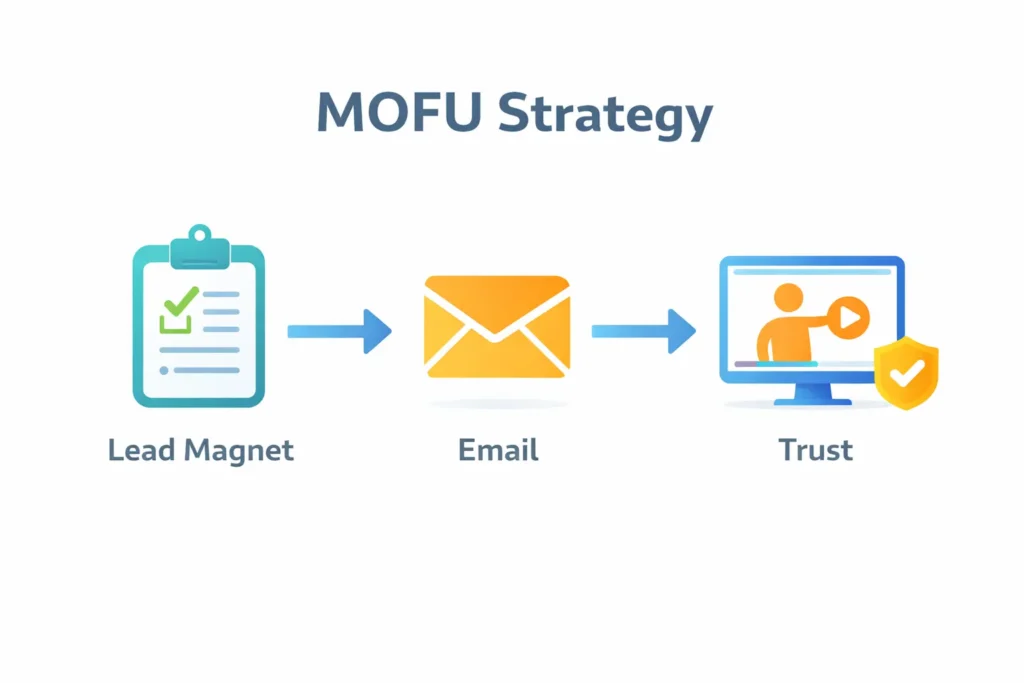
Lead magnets work best at MOFU because people are willing to exchange their email for value. In effective tofu mofu bofu marketing, high-performing lead magnets include checklists, templates, short guides, and mini-courses that solve one specific problem. These resources position your brand as helpful and knowledgeable while moving users deeper into the funnel.
Email Nurturing & Retargeting
Once someone opts in, email nurturing becomes essential. A smart tofu mofu bofu funnel uses simple email sequences and retargeting ads to share insights, examples, and proof. This consistent exposure builds confidence and gently prepares users for the next step without pressure.
BOFU – Bottom of the Funnel Explained
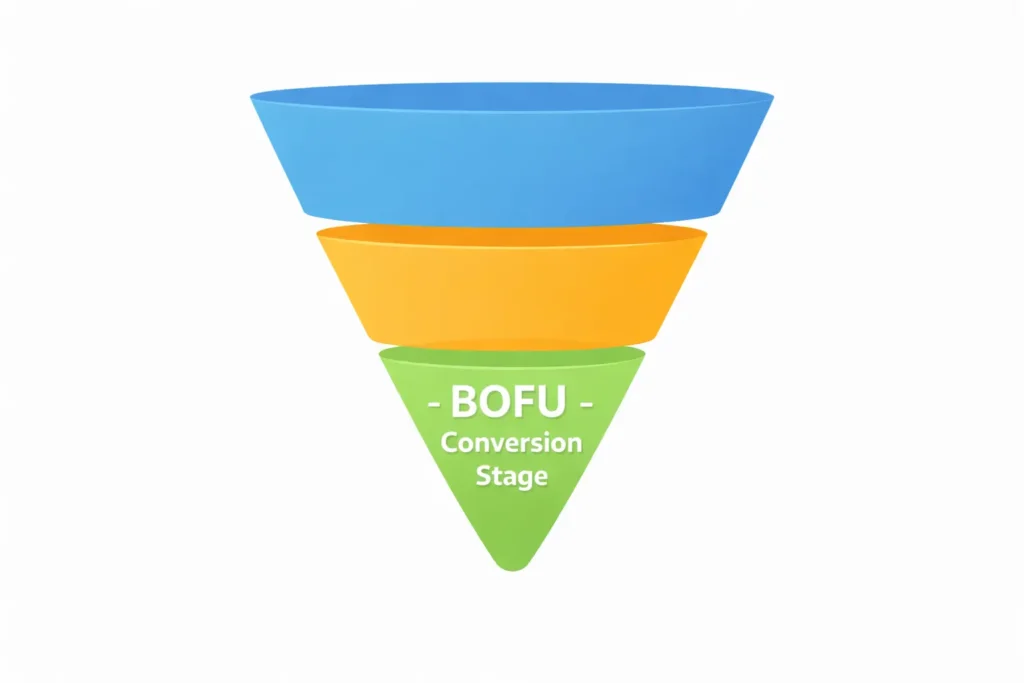
In the tofu mofu bofu framework, BOFU (Bottom of the Funnel) is the stage where people are ready to make a decision. They already understand their problem and trust possible solutions. Now they want reassurance that they’re choosing the right option. This is where your marketing shifts from education to action.
What Happens at the BOFU Stage
At BOFU, users are comparing final options. They may visit pricing pages, read testimonials, request demos, or book calls. A well-designed tofu mofu bofu funnel supports this stage with clear offers, strong proof, and simple next steps. The goal is to remove hesitation, not add more information.
BOFU Audience Mindset
BOFU audiences think, “This looks good, but will it work for me?” They want certainty, transparency, and ease. In effective tofu mofu bofu marketing, messages focus on outcomes, results, and real examples rather than features.
Why BOFU Is All About Conversion
BOFU is about turning trust into action. Clear CTAs, social proof, and friction-free processes help users feel confident enough to move forward and become customers.
Best BOFU Marketing Strategies
At the bottom of the funnel, your audience is no longer exploring; they’re deciding. In the tofu mofu bofu framework, BOFU strategies are designed to remove doubt and make the next step feel safe and obvious. This is where your messaging must shift from teaching to guiding action.
Sales Pages & Offers
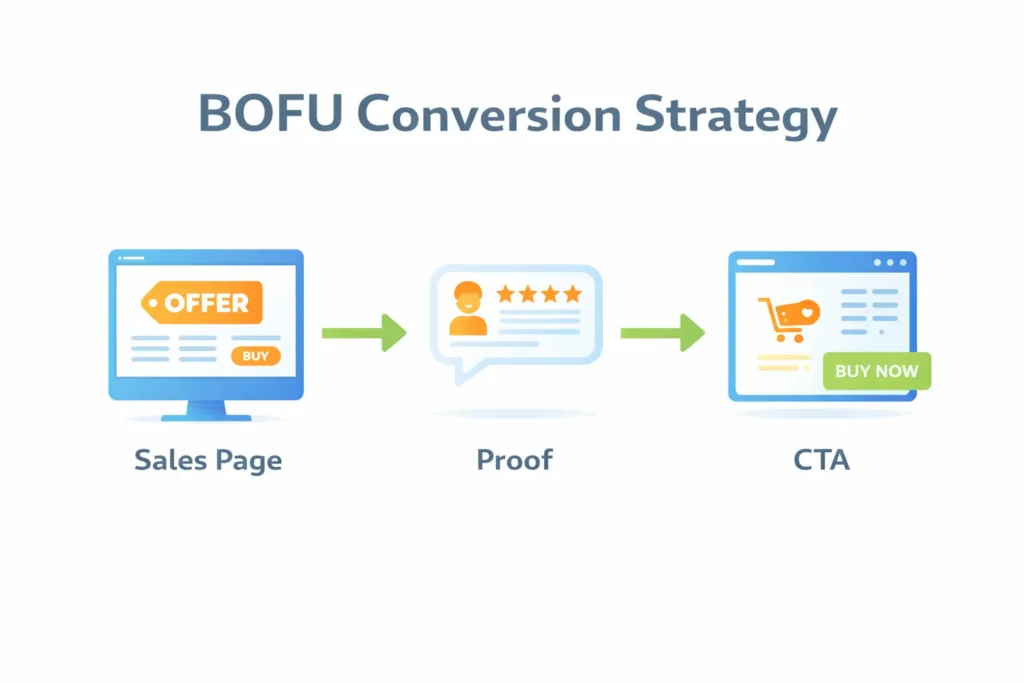
A strong BOFU strategy starts with a clear sales page or offer. Instead of overwhelming users with information, focus on outcomes, deliverables, and the transformation they’ll get. In effective tofu mofu bofu marketing, BOFU pages explain who the offer is for, what problem it solves, and what happens after purchase. Simple structure, transparent pricing, and a single CTA work best for beginners.
Social Proof & Urgency Triggers
Trust accelerates decisions. Testimonials, case studies, and real results help people feel confident. A well-built tofu mofu bofu funnel also uses ethical urgency, such as limited spots or time-bound bonuses, to encourage action without pressure. When done right, BOFU feels helpful, not pushy.
TOFU vs MOFU vs BOFU – Key Differences
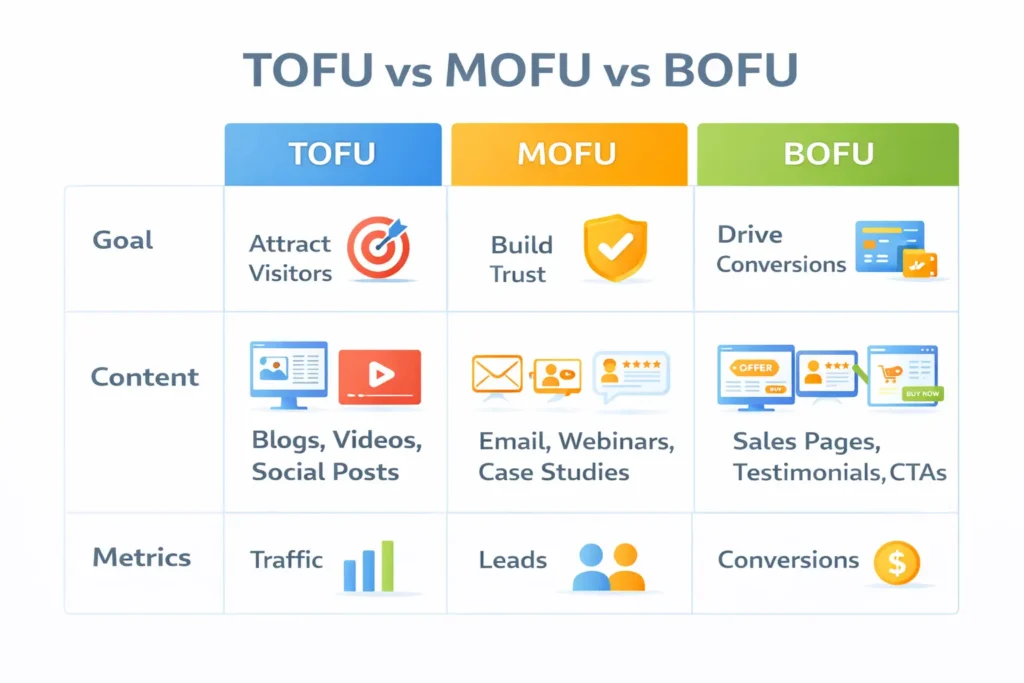
The biggest mistake beginners make is treating all audiences the same. In the tofu mofu bofu framework, each stage has a different purpose, and understanding these differences makes marketing far more effective. When you know how TOFU, MOFU, and BOFU work together, your funnel becomes structured rather than confusing.
Goals, Content, and Metrics Comparison
At the TOFU stage, the goal is awareness. Content here is educational and easy to consume, such as blog posts, videos, and social media tips. Success is measured by traffic, reach, and engagement. In tofu mofu bofu marketing, this stage focuses on attracting the right people, not selling.
MOFU shifts the goal to consideration and trust. Content becomes deeper, lead magnets, emails, and case studies. A firm tofu mofu bofu funnel measures success through clicks, email sign-ups, and lead quality.
BOFU is all about conversion. Content includes sales pages, demos, and testimonials, while metrics focus on conversion rate, sales, and revenue. Each stage supports the next, creating a complete and logical funnel.
Example of a Complete TOFU, MOFU, BOFU Funnel
A complete tofu mofu bofu funnel works best when each stage supports the next instead of operating in isolation. Let’s look at a simple, beginner-friendly example to see how everything connects in practice.
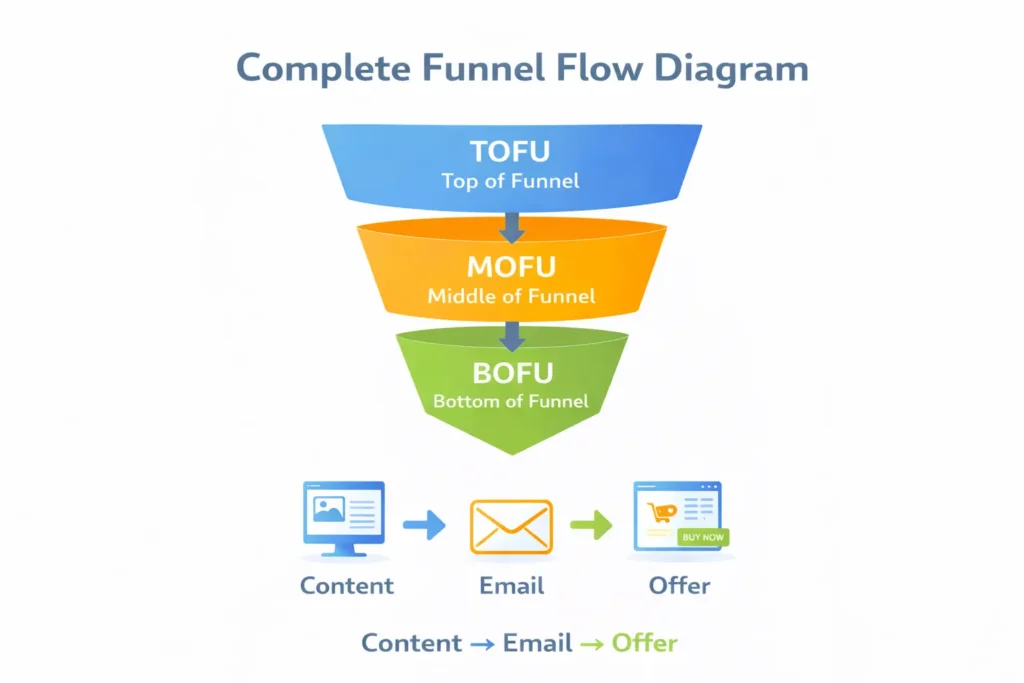
Step-by-Step Funnel Example for Beginners
Imagine a small businessoffering website design services. At the top of the funnel, people discover the brand through blog posts and short videos explaining common website mistakes. This is where tofu mofu bofu marketing attracts attention by educating instead of selling.
Next, interested visitors move into the middle of the funnel by downloading a free websitechecklist or subscribing to an email series. A structured tofu mofu bofu funnel nurtures these leads with tips, examples, and light case studies that build trust.
Finally, at the bottom of the funnel, ready prospects are invited to book a consultation or view a clear service page with testimonials and results. Each step feels natural because the message matches the buyer’s mindset at that stage.
How to Build a TOFU, MOFU, BOFU Strategy (Step-by-Step)
Building a funnel doesn’t have to be complicated. A simple tofu mofu bofu strategy works best when you focus on one explicit action at each stage and guide people forward naturally.
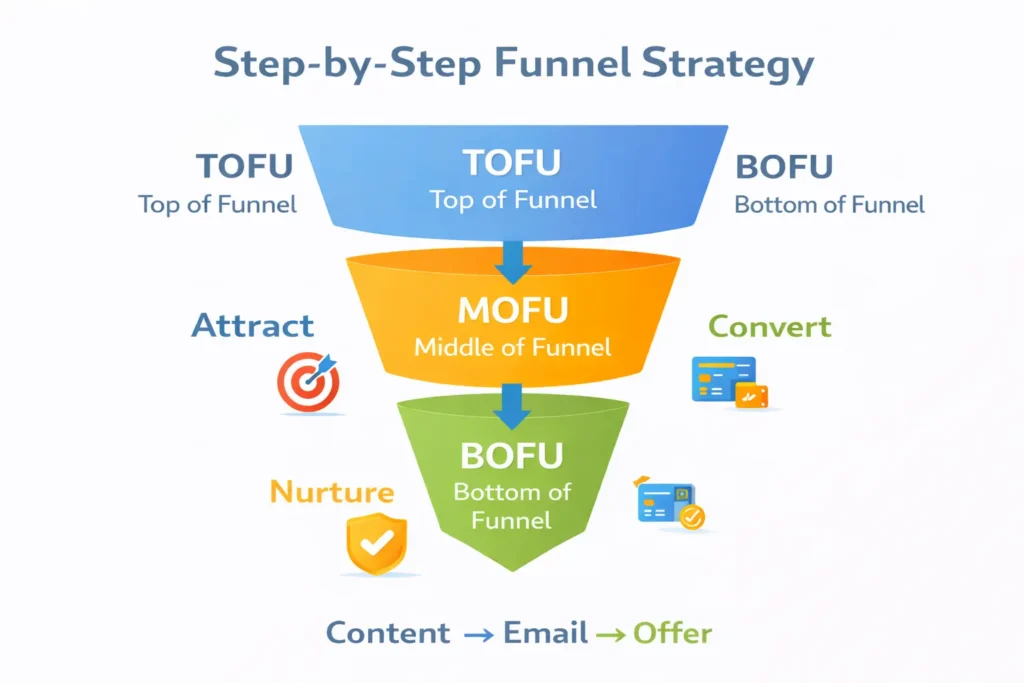
Step 1: Attract the Right Audience (TOFU)
Start by identifying one core problem your ideal audience cares about. Create helpful content that educates or solves that problem without selling. In effective tofu mofu bofu marketing, this stage is about visibility and relevance, not conversion.
Step 2: Nurture & Educate (MOFU)
Once people engage, move them into nurturing. Use emails, guides, or case studies to build trust and answer more profound questions. A smart tofu mofu bofu funnel uses this stage to position your brand as a reliable solution.
Step 3: Convert with Confidence (BOFU)
Finally, present a clear offer with proof and an easy next step. Remove friction, clarify outcomes, and let buyers make confident decisions. This step turns interest into action.
Common TOFU MOFU BOFU Mistakes Beginners Make
Many beginners struggle with funnels not because the concept is complex, but because they misapply it. In the tofu mofu bofu framework, each stage has a specific role, and problems start when those roles get mixed up.
One of the biggest mistakes is using sales content too early. When people are still learning, pushing offers creates resistance instead of interest. Another common issue is skipping MOFU altogether. Without nurturing, audiences never build trust, which weakens the entire marketing funnel tofu mofu bofu process.
A weak BOFU call-to-action is another silent killer. Even interested users won’t convert if the next step is unclear or confusing. Finally, many beginners make the mistake of not tracking or optimising anything. Without basic data, it’s impossible to know what’s working and what needs improvement.
How to Fix Them Fast
The fix is simple: match content to mindset, nurture before selling, use one clear CTA, and track basic funnel metrics. Minor corrections can dramatically improve results.
TOFU, MOFU, BOFU for Small Businesses
For small businesses, tofu mofu bofu is especially powerful because it brings structure to limited time and budget. Instead of trying every platform or tactic, this framework helps you focus on the right action at the right stage. Small teams benefit most because the funnel reduces guesswork and turns marketing into a repeatable system.
Why Small Businesses Benefit Most
Small businesses can’t afford wasted traffic or random posting. A clear tofu mofu bofu funnel helps attract the right audience, build trust gradually, and convert without aggressive selling. It allows you to compete with larger brands by being more relevant, not louder.
Simple Funnel Setup Example
A basic setup could look like this: educational blog posts or social content for awareness, a free checklist or guide for lead capture, and a clear service or product page for conversion. This approach fits naturally into tofu mofu bofu marketing without needing complex automation.
Budget-Friendly Tools & Tactics
Free tools like SEOblogs, social media, email platforms, and simple landing pages are enough to get started and grow steadily.
Tools to Build and Track Funnels
You don’t need expensive software to get started with tofu mofu bofu. The right tools help you create content, capture leads, and understand what’s working. For beginners, simplicity matters more than advanced features.
Free Tool Suggestions
Free tools are more than enough in the early stages. Google Analytics and Search Console help you understand traffic and behaviour. Free email tools can handle basic lead capture and nurturing. Simple landing pages and forms allow you to test a basic tofu mofu bofu funnel without technical complexity. These tools support learning and experimentation before scaling.
Paid Tool Suggestions
As your funnel grows, paid tools can save time and improve consistency. Email automation platforms, funnel builders, and analytics tools help manage leads more efficiently. In tofu mofu bofu marketing, paid tools are best used to automate nurturing, track conversions, and optimise performance, only after the foundation is working.
The key is choosing tools that support your process, not distract from it.
Measuring TOFU, MOFU, BOFU Performance
Tracking performance is what turns a funnel into a growth system. In the tofu mofu bofu framework, each stage has distinct goals, so measuring the same metric across stages doesn’t make sense. Instead, you track progress based on what the user is supposed to do at that stage.
KPIs for Each Funnel Stage
At the TOFU stage, the focus is on visibility. Metrics like websitetraffic and content reachshow whether people are discovering your brand. If these numbers are low, your awareness efforts need improvement.
In MOFU, engagement matters more than volume. Click-through rates, email opens, and leads indicate whether your content is building interest and trust. A well-structured tofu mofu bofu funnel uses these metrics to identify where nurturing needs improvement.
At BOFU, performance is measured by action. Conversion rate and sales reveal whether your offers, messaging, and CTAs are working. In tofu mofu bofu marketing, improving BOFU metrics often comes from clarity, proof, and a smoother buying process.
When you track the right KPIs at each stage, optimisationbecomes focused and straightforward.
Marketing Funnels in 2026 and Beyond
As digital behaviour continues to evolve, funnels are becoming smarter, but the fundamentals remain the same. In tofu mofu bofu, the future isn’t about replacing strategy with technology; it’s about using tools to support better timing, personalisation, and consistency. Buyers still move through awareness, consideration, and decision, only now they expect faster, more relevant experiences.
AI, Automation, and Smart Funnels
In modern tofu mofu bofu marketing, AI helps analyse behaviour, suggest content, and automate follow-ups, while automation ensures no lead is forgotten. Smart funnels can adapt messaging based on actions, making the experience feel more personal without manual effort. However, trust, clarity, and value will always matter more than tools.
Looking ahead, successful funnels will focus on first-party data, ethical personalisation, and long-term relationships. Businesses that combine a simple funnel structure with intelligent automation will grow more efficiently without losing the human touch that drives real conversions.
Conclusion
Marketing doesn’t have to feel chaotic or confusing. Once you understand how a funnel works, everything starts to make sense. The real power of this framework is that it aligns marketing with how people actually think and decide. When you respect the buyer’s mindset at each stage, your messaging feels helpful instead of pushy.
By now, you’ve learned what is tofu mofu bofu, how each stage plays a different role, and why structure matters more than tactics. Whether you’re creating content, running ads, or building email campaigns, the goal is the same: guide people step by step rather than rush them to buy. That’s the core tofu mofu bofu meaning in practice.
You don’t need complex tools or a big budget to get started. Begin with one clear problem, create content for awareness, nurture interest with value, and present a clear offer when people are ready. Focus on consistency, not perfection. When your funnel is built around trust and clarity, growth becomes predictable, and marketing finally feels manageable.
H2: FAQs About TOFU, MOFU, BOFU
What is TOFU MOFU BOFU in marketing?
Tofu mofu bofu is a marketing funnel framework that explains how people move from discovering a brand to becoming customers. TOFU focuses on awareness, MOFU builds trust and consideration, and BOFU drives conversion. In simple terms, it helps marketers send the right message at the right time, rather than selling too early.
Is TOFU MOFU BOFU still relevant?
Yes, more than ever. Buyer behaviour has changed, but decision-making psychology hasn’t. Modern tofu mofu bofu marketing works because people still need education before trust, and trust before purchase. While tools and platforms evolve, the funnel structure remains effective in guiding users naturally.
Can one business use all three stages?
Absolutely. In fact, every businessshould use all three stages. A complete tofu mofu bofu funnel ensures you attract new audiences, nurture interested leads, and convert ready buyers. Skipping any stage usually results in low engagement or poor conversion rates.
What comes after BOFU?
After BOFU, retention and loyalty come into play. Once someone becomes a customer, the focus shifts to onboarding, support, repeat purchases, and referrals. While not always labelled as part of the funnel, post-purchase engagement is critical for long-term growth and maximising customer lifetime value.