
Introduction
In the ongoing debate over paid reach vs organic reach Facebook continues to be the main stage for digital marketers. If you’ve been consistently posting high-quality content but face little engagement, you’re not alone. By 2026, the reality for most business pages is apparent: the era of reaching your entire audience for free has ended.
As the platform transitions from a friend-based feed to an AI-driven “Discovery Engine,” businesses are struggling more than ever to maintain visibility. But is organic reach really gone, or has the strategy evolved? In this guide, we analyse recent data on Facebook organic reach percentage, compare the real costs of “pay-to-play,” and present a hybrid approach that combines both methods to boost your ROI.
Whether you are trying to define organic reach vs. paid reach for a new campaign or you’re looking for the current average organic reach on Facebook to benchmark your performance, this is the roadmap you need to navigate the algorithm this year.
Understanding Facebook Reach
Before comparing paid reach vs organic reach Facebook, it’s essential to understand what reach really means and how it directly influences your visibility, leads, and revenue.
Many businesses focus on likes or followers, but reach is the real gatekeeper. If your content doesn’t reach people, it can’t convert.
What Does “Reach” Mean on Facebook?
Reach is the number of unique people who see your content on Facebook.
It answers a straightforward question:
How many real people saw this post?
This applies to both organic vs paid reach on Facebook:
- Organic reach → people who see your post naturally
- Paid reach → people who see your post through ads or boosted content
Reach vs Impressions (Quick Clarity)
- Reach = unique people
- Impressions = total views (one person can see the same post multiple times)
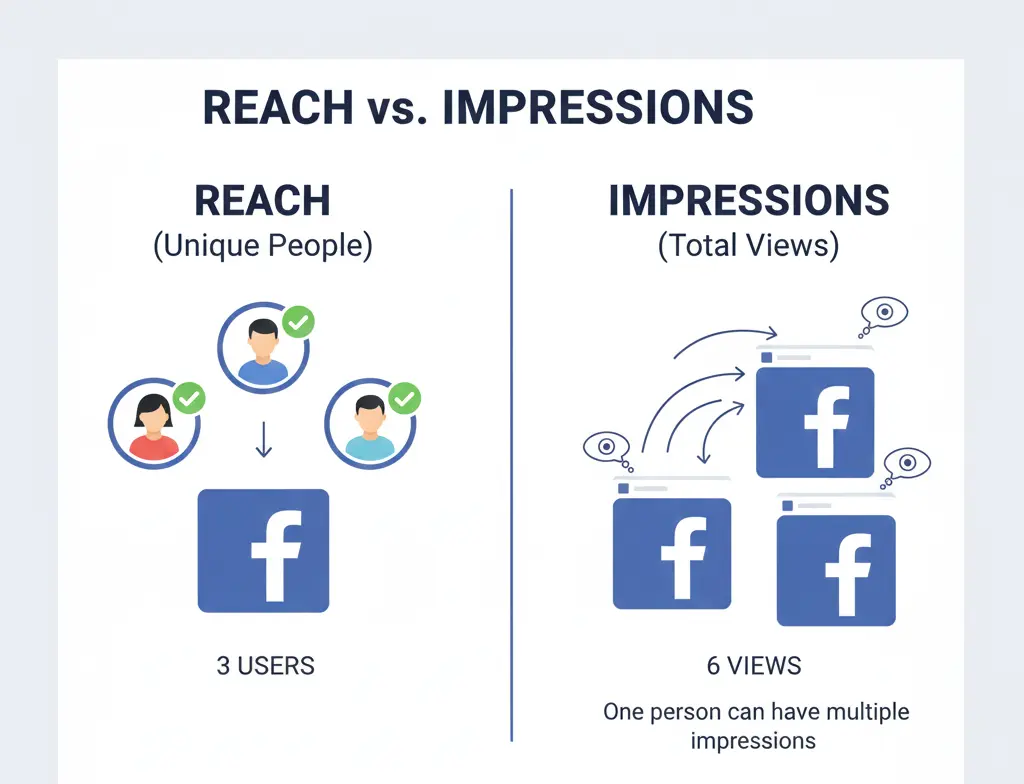
Example:
If one person sees your ad 3 times:
- Reach = 1
- Impressions = 3
This distinction matters because reach controls exposure, while impressions only show repetition.
👉 Whether it’s organic reach vs paid reach, reach is the metric that tells you how many new eyes you’re getting.
Why Facebook Reach Matters for Businesses
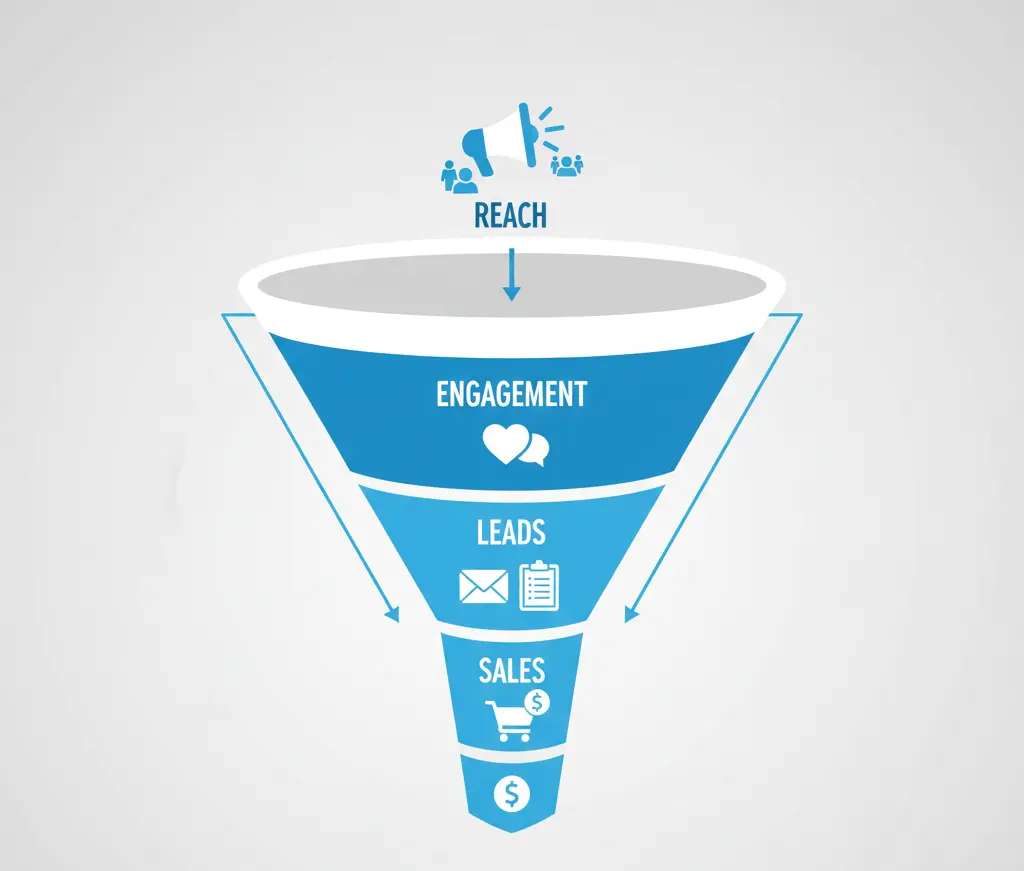
Reach isn’t just a vanity metric. It’s the starting point of your entire marketing funnel.
No reach → no engagement
No engagement → no traffic
No traffic → no sales
Here’s how reach directly affects business growth:
Brand Awareness
- Reach determines how many people discover your brand
- Organic reach builds familiarity and trust over time
- Paid reach accelerates visibility to new audiences
That’s why businesses compare paid reach vs organic reach Facebook, as they serve different purposes during the awareness stage.
Lead Generation
- Higher reach = more potential leads entering your funnel
- Organic reach attracts warmer, trust-based traffic
- Paid reach allows precise targeting by interests, location, and behavior
If your average organic reach on Facebook is low, paid reach becomes the fastest way to fill the pipeline.
Sales & Retargeting Power
- Reach feeds retargeting audiences
- People who see your content can be retargeted with ads
- This is where organic vs paid reach work best together
Organic reach warms the audience.
Paid reach closes the sale.
Define Organic Reach vs Paid Reach on Facebook
Before comparing paid reach vs organic reach Facebook, it’s essential to clearly define organic reach vs paid reach starting with organic reach.
Organic reach is where most businesses begin… and where many get confused.
What Is Organic Reach on Facebook?
Organic reach is the number of unique people who see your Facebook content without any paid promotion.
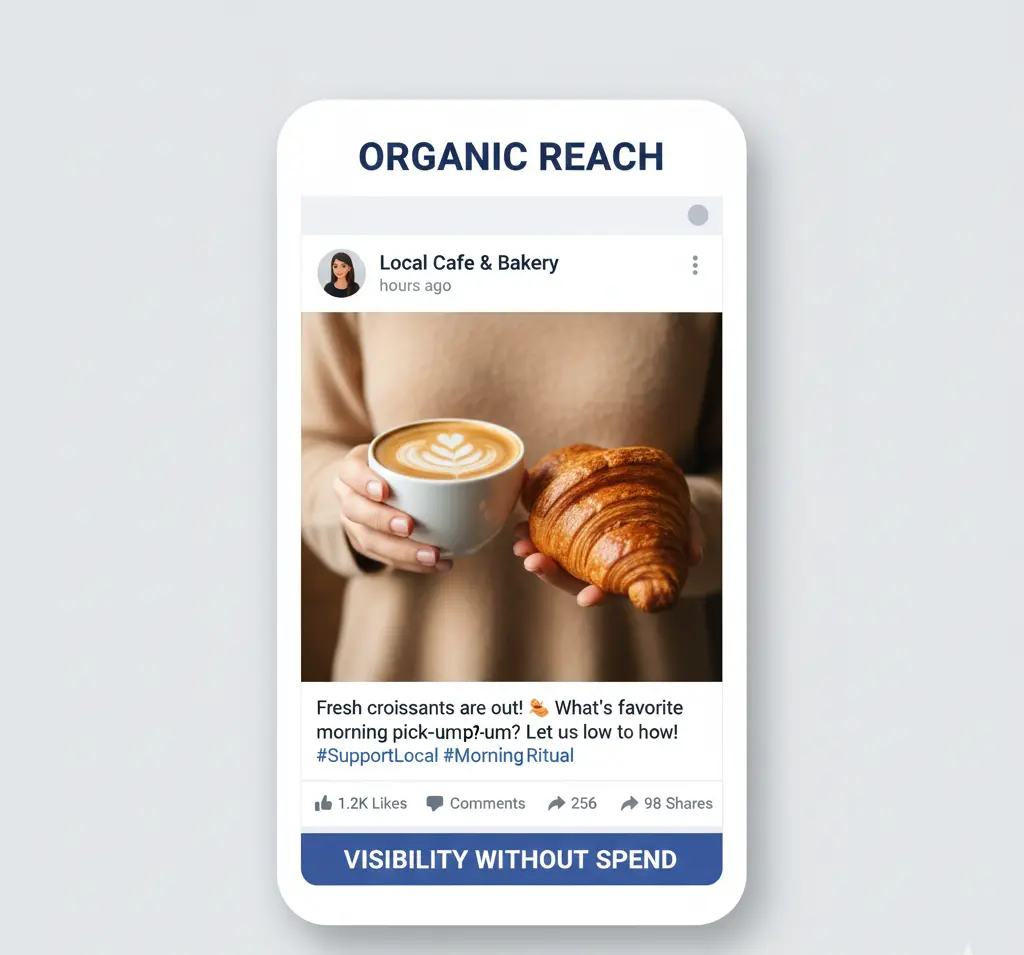
This includes visibility gained through:
- Followers’ feeds
- Shares by other users
- Engagement signals (likes, comments, saves)
- Group activity
In the organic vs paid reach debate, organic reach is the earned visibility side of the equation. You don’t pay for distribution, you earn it through relevance and engagement.
How Organic Reach Works on Facebook
Organic reach depends on how Facebook’s algorithm evaluates your content. Each post goes through a brief “test phase” during which Facebook decides whether it’s worth showing to more people.
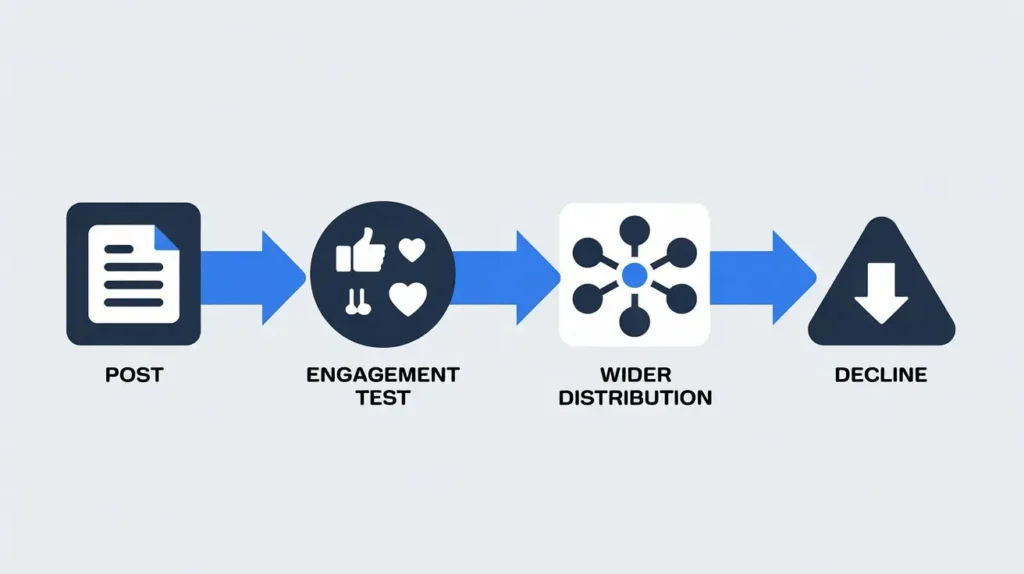
If engagement is strong, reach expands.
If engagement is weak, distribution stops.
This is why the average organic reach on Facebook has declined; competition for attention is higher than ever.
Facebook Algorithm & Organic Distribution
Facebook prioritizes content that:
- Sparks meaningful interactions
- Keeps users on the platform
- Feels personal, not promotional
Key organic ranking signals include:
- Comments and replies
- Shares (powerful signal)
- Watch time (especially for Reels)
- Saves
- Profile or page relationships
Reels and shareable content currently receive higher organic distribution than plain text or external links.
Examples of Organic Reach on Facebook
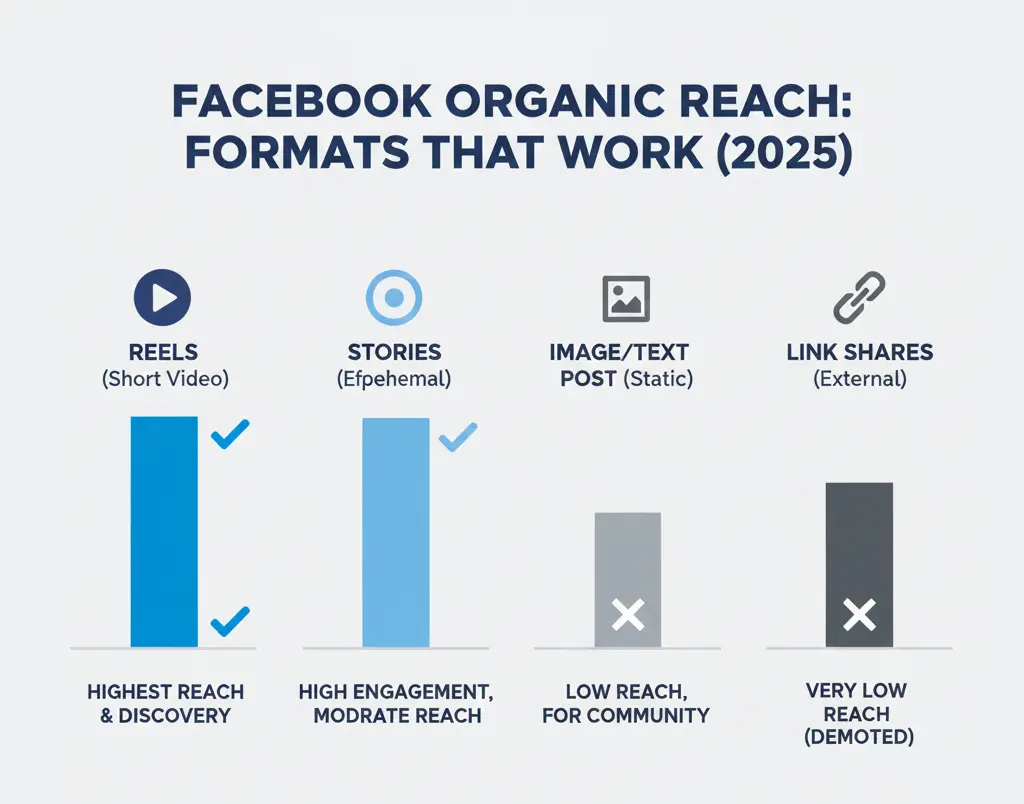
Organic reach comes from multiple content formats, not just posts:
- Posts: Text, images, carousels
- Reels: Highest organic reach potential
- Stories: Limited but consistent exposure
- Shares & Group Activity: Strong reach multipliers
Among these, Reels and shares consistently outperform other formats in organic distribution.
Pros & Limitations of Organic Reach (Brief)
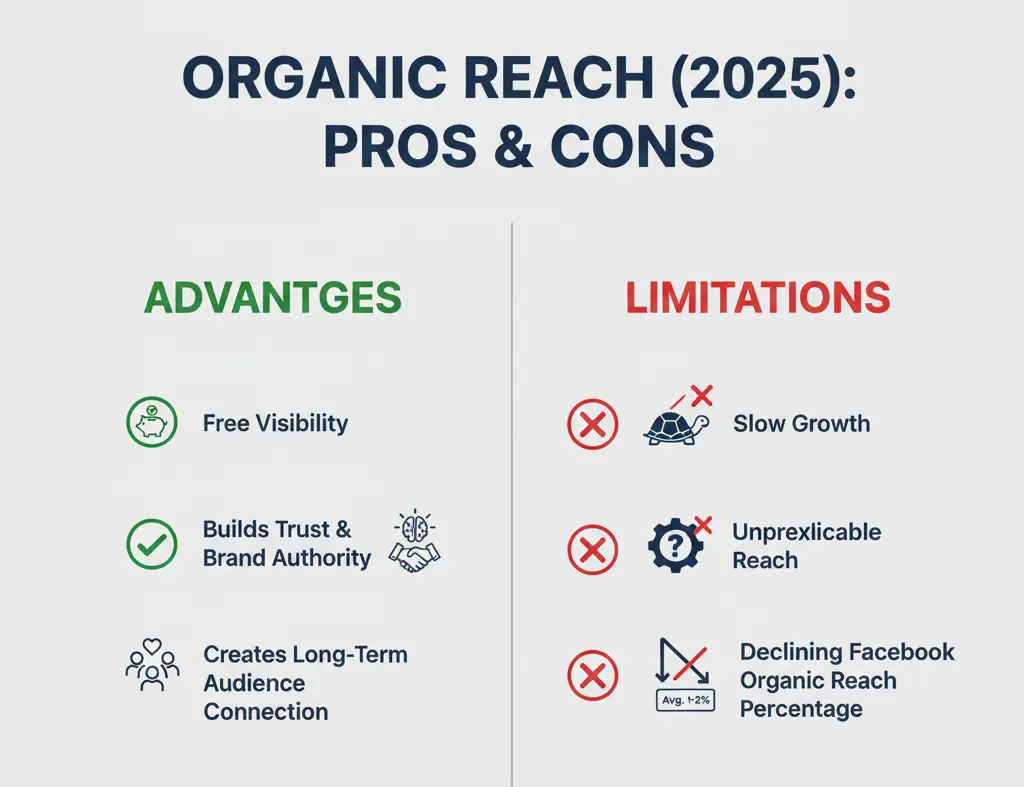
Advantages
- Free visibility
- Builds trust and brand authority
- Creates long-term audience connection
Limitations
- Slow growth
- Unpredictable reach
- Declining Facebook organic reach percentage
This is why relying only on organic reach is risky and why the discussion around paid reach vs organic reach Facebook exists in the first place.
What Is Paid Reach on Facebook?
If organic reach is a slow-growing garden, paid reach is the industrial irrigation system that ensures your message reaches the right soil instantly.
Paid reachis the number of unique users who view your content as a result of your promotional investment. Unlike organic distribution, which depends on your follower count and engagement, paid reach enables you to “buy” exposure to audiences unfamiliar with your brand.
Facebook Ads Auction Explained
Many businesses believe that the highest bidder always secures the best ad spots. By 2026, however, this is only partly true. Facebook employs a sophisticated Ad Auction system to determine which ad appears to a user at any moment. The winner is selected based on a “Total Value” score that considers three key factors.
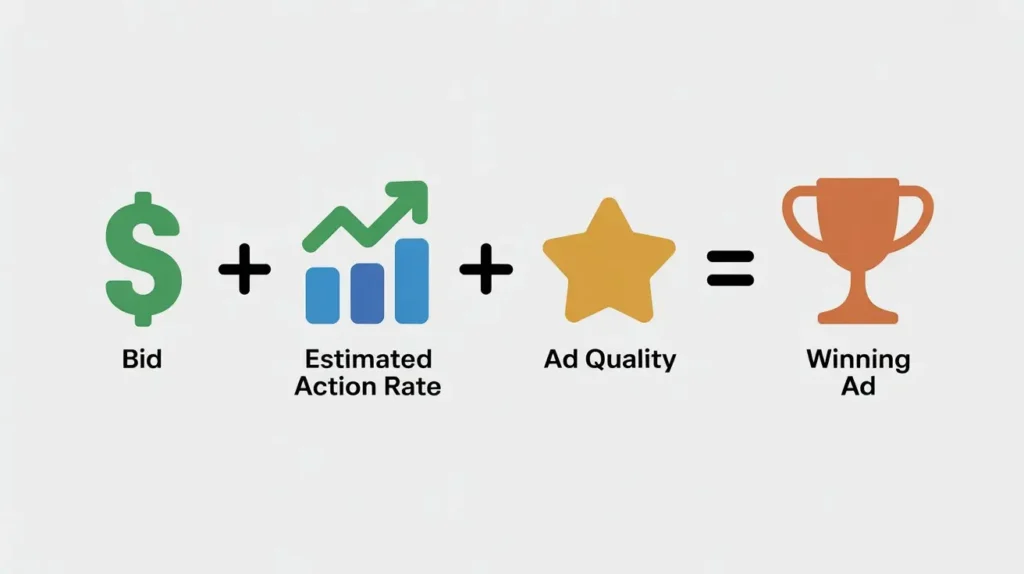
- The Bid: How much you are willing to pay for the desired action (e.g., a click or a sale).
- Estimated Action Rates:Indicate how likely Facebook believes a particular individual is to interact with your ad, based on their previous activity.
- Ad Quality: A score based on user feedback (likes vs. “hide ad”) and how relevant the content is to the target audience.
Key Takeaway: You can actually outbid a competitor with a larger budget if your ad is higher quality and more relevant to the audience.
Examples of Paid Reach
- Facebook Ads (Ads Manager):These are sophisticated campaigns designed to achieve specific goals, such as lead generation, website conversions, or app installs. They allow deep customization of headlines, descriptions, and call-to-action buttons.
- Boosted Posts: The “entry-level” of paid reach. You take an existing post on your timeline and pay to push it to a broader audience. This is best for quick engagement or brand awareness.
- Retargeting Ads:These ads follow people who have already interacted with your business, such as those who visited your website but didn’t buy. They are the highest-converting form of paid reach.
Pros & Limitations of Paid Reach
- Pros:Guaranteed visibility, hyper-specific targeting (by interest, behavior, or location), and the ability to scale your results as soon as you find winning creative.
- Limitations: The “Faucet Effect” is that your reach drops to zero the moment your budget runs out. It also requires constant monitoring to prevent “ad fatigue” and rising costs.
Facebook Organic Reach Percentage – The Reality Check
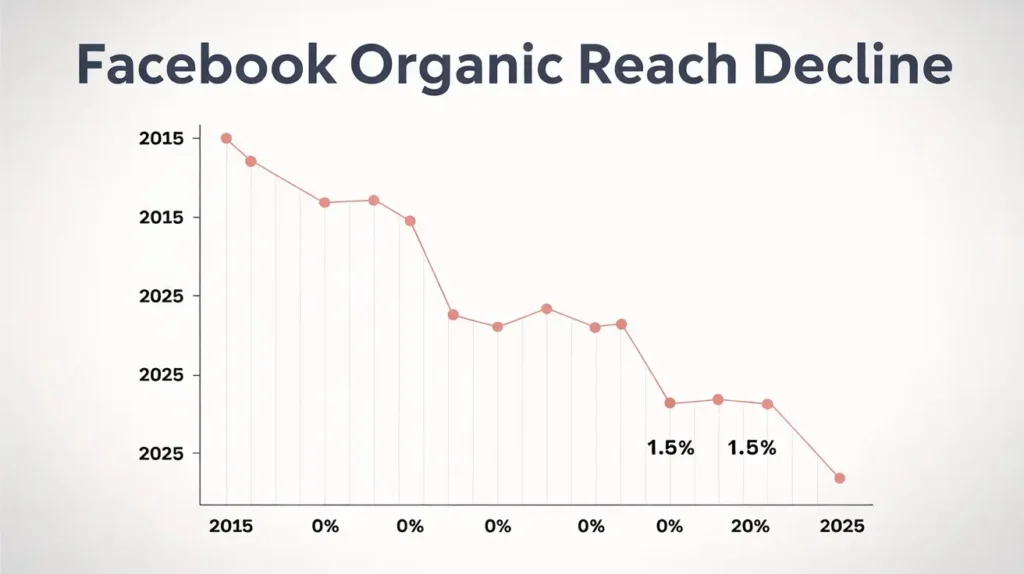
Many business owners are surprised to learn that their “audience” isn’t truly viewing their posts. In 2026, Facebook organic reach percentage has reached a historic low, turning the platform into a genuine “pay-to-play” environment for those who fail to adapt.
Current Data: Average Organic Reach on Facebook
By late 2026, the average organic reach on Facebook for business pages ranges from 1.1% to 2.2%. With 10,000 followers, approximately 150-200 will see your post in their feeds without paid promotion.
- Pages vs. Profiles:Personal profiles still reach significantly more people (often 10% or more) as Facebook continues to prioritize “person-to-person” connections over “brand-to-person” broadcasts.
- The Trend:Organic reach has fallen by nearly 40% since 2021, a direct result of increased content volume and a more aggressive ad-focused algorithm.
| Industry | Average Organic Reach (2025) |
| Travel & Hospitality | 2.4% |
| Non-Profit | 2.1% |
| Education | 1.8% |
| Retail & E-commerce | 1.3% |
| Health & Beauty | 1.1% |
Why Is Organic Reach Dropping?
The decline isn’t an accident. It’s the result of three significant shifts in Meta’s business model:
- AI-Powered Discovery Engine:Facebook has moved away from showing you what your “Friends” post toward showing you what “AI thinks you want.” This means brands now compete with viral sensations and global creators, not just other local businesses.
- Algorithm Shifts (Engagement Quality): Simple “likes” no longer fuel reach. The 2026 algorithm prioritizes long-form comments, Messenger shares, and “Save” actions.
- Pay-to-Play Ecosystem: With over 3 billion monthly users, the feed is crowded. Facebook naturally prioritizes paid content to ensure its $116 billion+ ad revenue remains stable.
What Actually Affects Your Reach Today?
If you want to beat the average, you have to optimize for the signals Facebook’s AI cares about:
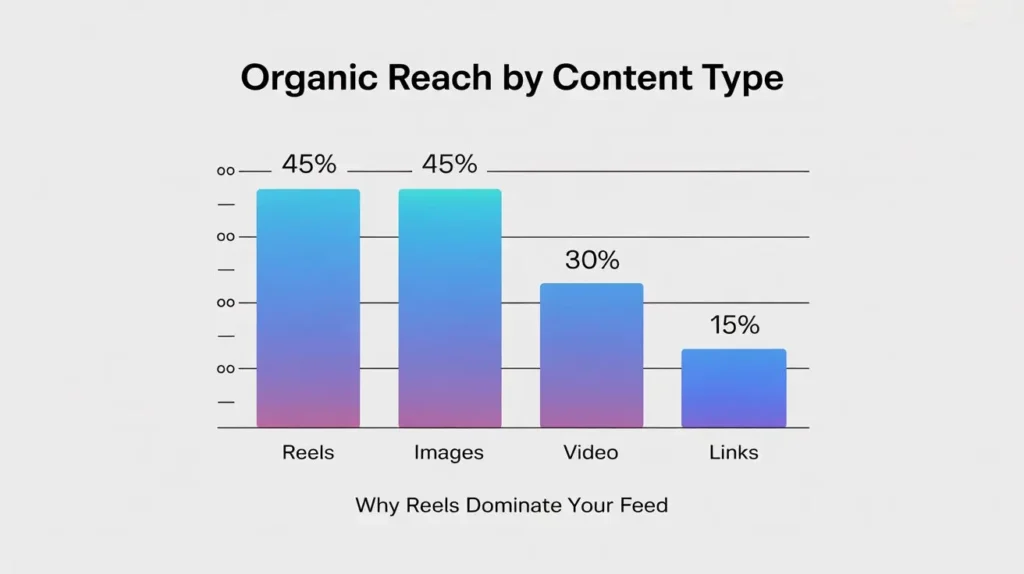
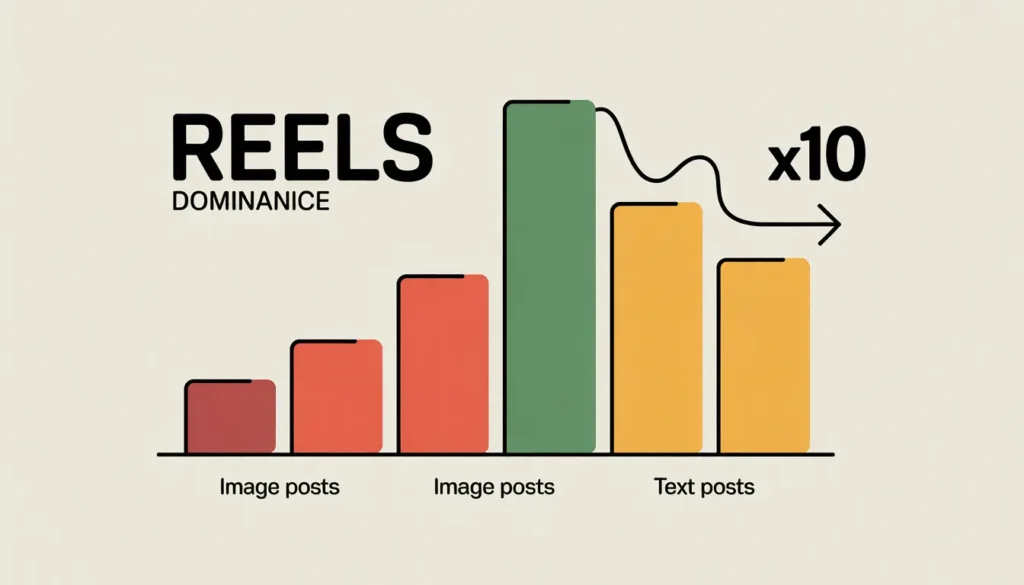
- Content Type (Reels vs. Posts):Facebook Reels remain the “reach loophole.” While static posts may reach 1% of your audience, a high-quality Reel can get 10x your follower count because it is pushed to the “Discovery” feed.
- Engagement Signals: A “Share” is worth 10x more than a “Like.” If people aren’t talking to each other in your comments, the algorithm will stop distributing your post.
- Posting Consistency:Interestingly, posting too often (more than once a day) can cannibalize your reach. The “sweet spot” in 2026 is 3/4 high-quality, high-value posts per week.
- Saves & Shares: These are the strongest signals of “Value.” When a user saves a post to look at later, Facebook considers that content “Elite” and boosts its visibility.
Paid Reach vs Organic Reach Facebook (Head-to-Head Comparison)
Understanding the difference between paid reach vs organic reach Facebook has evolved beyond simply “free versus paid.” By 2026, these channels will have distinct roles in a company’s growth strategy. Organic reach acts as your “social proof” and trust booster, whereas paid reach focuses on “scaling” and generating leads.
Cost Comparison
- Organic Reach: Theoretically “free,” but it requires a significant investment in time and creative talent. High-quality video production and community management are hidden costs.
- Paid Reach: Requires a direct financial budget. In 2026, the average CPM (cost per 1,000 impressions) on Meta platforms hovers around $8.19, while the average CPC (cost per click) is approximately $0.58–$0.70.
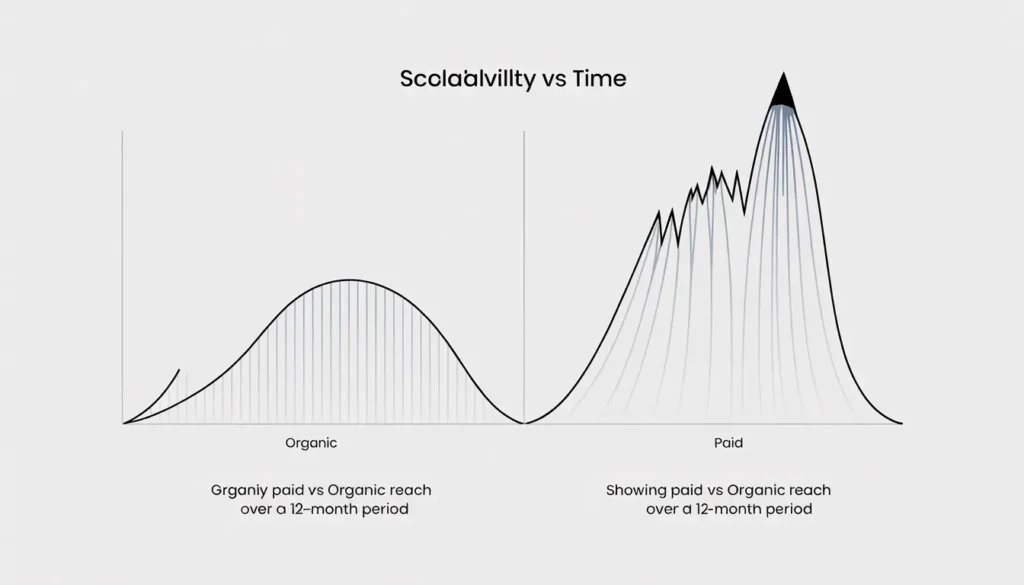
Speed & Scalability
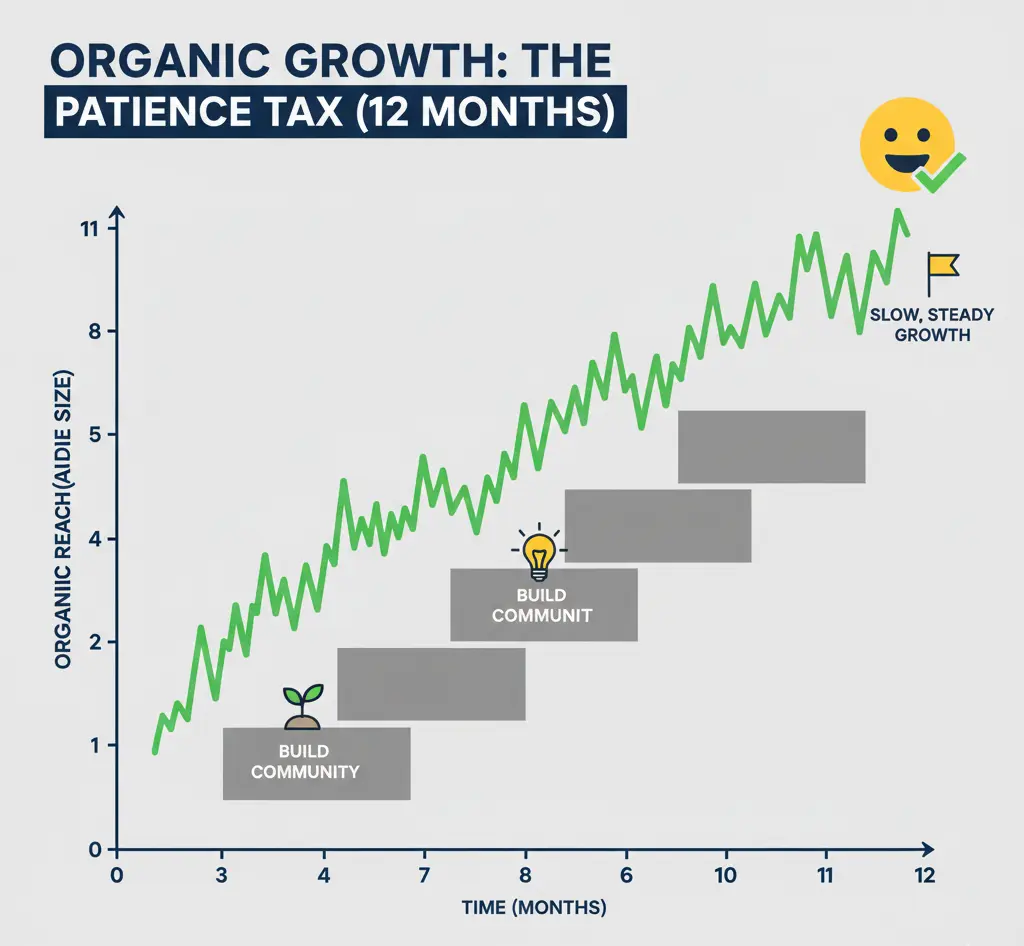
- Organic Reach:Extremely slow. It can take months or years of consistent posting to see a significant compounding effect. It is also “unscalable”; you cannot simply “post harder” to reach 1 million people tomorrow.
- Paid Reach: Instant and infinitely scalable. Once you find a winning ad, you can increase your budget to reach hundreds of thousands of users within hours.
Targeting Capabilities
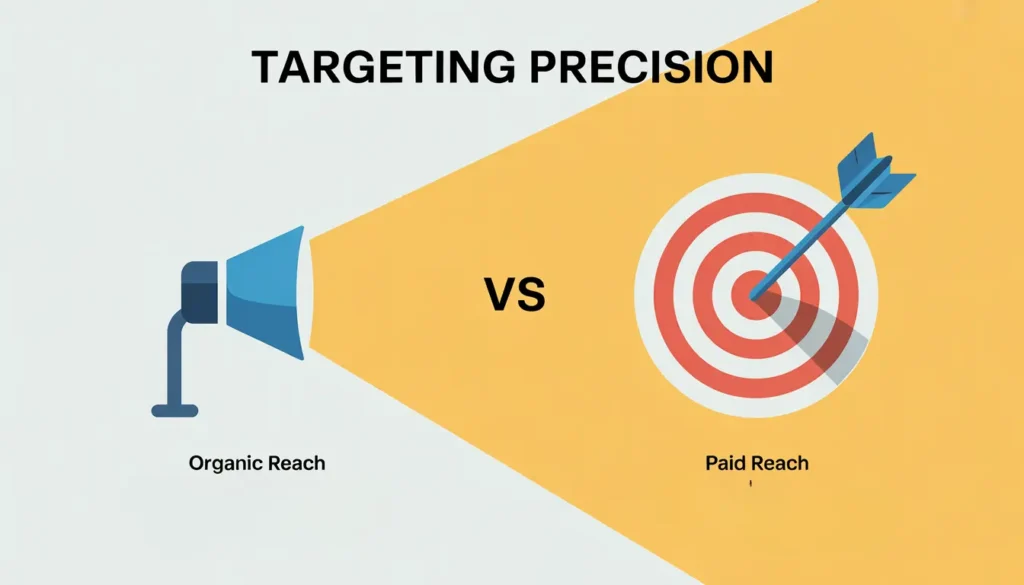
- Organic Reach:Limited to your existing followers and a small “lookalike” audience if your content goes viral. You have little control over who sees your organic posts.
- Paid Reach: Precise and data-driven.You can target users by interests, behaviors, exact location, and even life events (e.g., “people who just moved” or “expecting parents”).
Trust & Engagement Levels
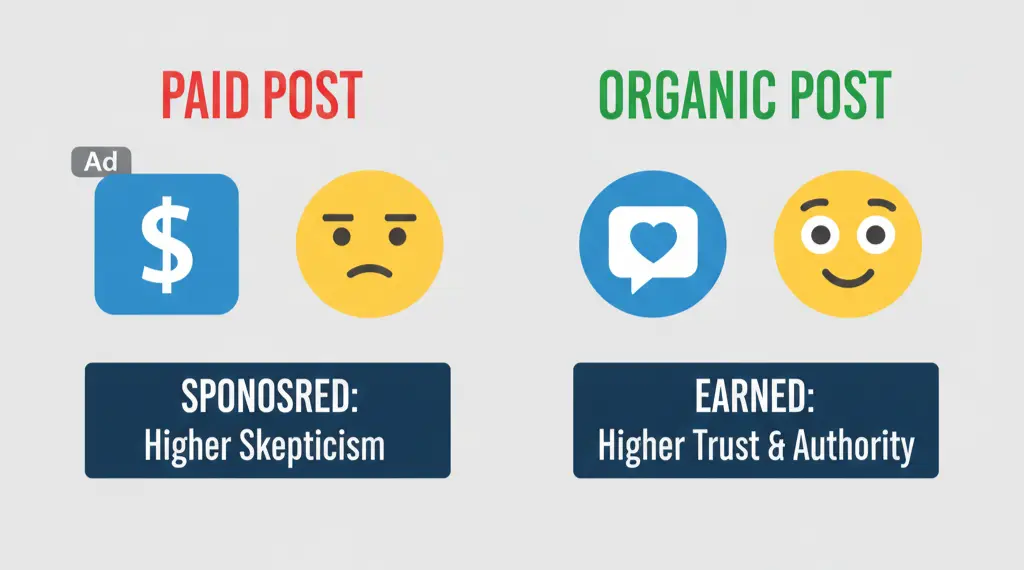
- Organic Reach: Wins on trust. Users are 55% more likely to trust content they discover “naturally” or through a recommendation than a sponsored ad. Organic content builds a community and fosters long-term loyalty.
- Paid Reach:Is often met with skepticism, but modern “native” ads, those that resemble regular posts, have significantly reduced this skepticism.
Short-Term vs Long-Term Results
- Organic Reach: An asset. A well-performing organic post or a strong community group will continue to provide value and traffic long after you stop posting.
- Paid Reach: A faucet. It is designed for short-term wins, product launches, and seasonal sales. When the budget stops, the reach stops.
Comparison Table: Organic vs Paid Reach on Facebook
| Feature | Organic Reach | Paid Reach |
| Cost | Time & Effort (Free) | Direct Ad Spend ($$$) |
| Speed | Very Slow | Instant |
| Targeting | Random / Followers | Hyper-Precise AI Targeting |
| Trust Factor | High (Authentic) | Moderate (Salesy) |
| Scalability | Low | Very High |
| Best Use Case | Brand Voice & Loyalty | Sales, Leads & Launches |
Pros and Cons of Organic Reach
While the average organic reach on Facebook has tightened, it remains a vital component of any digital presence. Think of organic reach as the “soul” of your brand. It’s where you build your reputation before you try to sell.
Advantages
- Cost-Effective (Free): The most obvious benefit is that it doesn’t require a direct ad spend. While it takes time to create, you aren’t paying a “tax” to Facebook to speak to your audience. This makes it accessible for businesses of all sizes to maintain a baseline presence.
- Trust-Building: Organic content feels more “real.” In 2026, users are increasingly skeptical of polished ads. Content that appears naturally in a feed, like a behind-the-scenes video or a helpful tip, builds much higher levels of authentic trust.
- Community-Focused:Organic reach excels at nurturing a loyal fanbase. It enables two-way conversations through comments and shares, turning passive followers into active brand advocates.
Pro Tip: In 2026, the most successful organic strategy is “Community-First.” Use Facebook Groups to bypass the standard feed limitations, as Group content still receives a significant “reach boost” from the algorithm.
Limitations
- Slow Growth:Unlike paid campaigns, which can explode overnight, organic reach is a marathon. It requires months of consistent, high-quality posting to see a meaningful increase in your Facebook organic reach percentage.
- Unpredictable: You are at the mercy of the algorithm. A post you spent hours on might reach 10 people, while a random photo might reach 1,000. There is no “guarantee” of visibility, even for your most loyal followers.
- Limited Reach: Even with the best content, you are fighting a losing battle against the “Pay-to-Play” model. Most business pages find that their content reaches only 1% to 2% of their fans organically.
Pros and Cons of Paid Reach
While organic efforts build the “soul” of your brand, paid reach vs organic reach Facebook is often the difference between a brand that is merely present and one that is profitable. In 2026, paid reach has shifted from a luxury to a strategic necessity for businesses looking to scale past the algorithm’s “gatekeepers.”1
Advantages
- Instant Visibility:The biggest draw of paid reach vs organic reach is speed. You don’t need to wait for the algorithm to “test” your post with a small group of followers. After your ad is approved, you can skip organic feed limitations and appear in thousands of targeted feeds within minutes.
- Precise Targeting: Facebook’s 2026 AI (like the Advantage+ suite) allows for unprecedented precision. You can define organic reach vs paid reach by their level of control: organic is broad and unpredictable, whereas paid reach lets you target users based on real-time behaviors, life events (like moving house), or their proximity to your storefront.
- Scalable Results: Unlike organic content, which has a natural “engagement ceiling,” paid reach is infinitely scalable. If an ad is delivering a positive return on investment (ROI), you can increase your budget to reach a larger slice of the average organic reach on Facebook that you would otherwise never access.
Limitations
- Costs Money: This is the most obvious trade-off. To maintain your visibility, you must commit to a daily or lifetime budget. In highly competitive industries, the “pay-to-play” model can become expensive as bid prices rise during peak seasons.
- Stops When the Budget Stops:Unlike an organic post that remains on your timeline as a permanent asset, paid reach is a “faucet.” When your campaign ends or your budget runs out, your visibility and resulting traffic drop to zero.
- Requires Optimization Skill: Throwing money at a poorly designed ad won’t fix a bad strategy. Successfully managing organic vs paid reach on Facebook requires a technical understanding of the “Ad Auction,” A/B testing of creatives, and the ability to interpret data to avoid “ad fatigue,” where your audience stops responding to repetitive content.
When Should You Use Organic Reach?
Despite the low Facebook organic reach percentage, organic efforts remain vital. Rather than seeing paid reach vs organic reach Facebook as an either/or choice, consider organic content as the foundational element where trust and genuine connections are established. This approach is essential for smaller brands and those aiming for long-term relationships.
Best Use Cases for Small Businesses
- New Brands Building Identity:For a new business with a limited budget, organic reach is essential for establishing a brand voice and personality and for building an initial audience without an immediate financial investment. It allows you to test content, understand your audience, and refine your messaging before spending money.
- Low Budget & Bootstrapping:When every dollar counts, focusing on organic strategies maximizes your “free” exposure. It forces you to find creative ways to engage your audience and leverage existing connections rather than relying on paid placements. This is where the hustle of content creation and community engagement truly shines.
- Long-Term Authority & Thought Leadership:Organic content, especially educational or insightful posts, positions your brand as an expert. It builds authority over time, not just by showing up in feeds, but by consistently delivering value that your audience seeks out and shares.
Content Types That Perform Best Organically
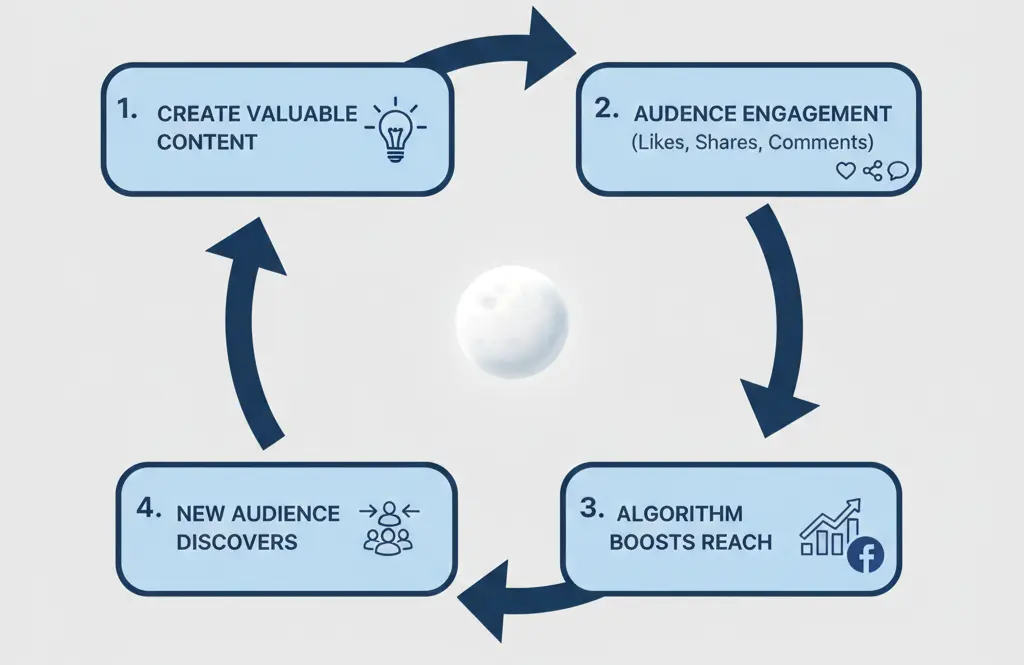
To get the most out of your organic efforts, you need to understand what the 2026 algorithm rewards. It’s no longer just about pretty pictures; it’s about genuine engagement and value.
- Reels (Short-Form Video):Without a doubt, Reels are the current “king” of organic reach. Facebook heavily promotes Reels to new audiences, making them the most effective way to gain visibility beyond your followers. They’re perfect for quick tips, relatable humor, or showing a product in action. (image: Reels Dominance)
- Educational Posts (Guides, Tips, How-Tos):Content that teaches or solves a problem tends to generate higher engagement (saves, shares, thoughtful comments). Consider infographics, carousel posts with step-by-step instructions, or concise “myth vs. fact” videos related to your niche.
- Behind-the-Scenes & Authenticity:People connect with people, not logos. Showing the human side of your business, your team, your process, and your values builds rapport and fosters a stronger community. This kind of content bypasses the often-skeptical view of purely promotional material.
- Community-Driven Content: Ask questions, run polls, start discussions. Content that encourages your audience to interact with each other (not just with your brand) signals high value to the algorithm and significantly boosts visibility. Consider leveraging Facebook Groups for this, where average organic reach on Facebook is often higher.
When Should You Use Paid Reach?
In the debate over paid reach vs organic reach Facebook strategy, paid reach is your “acceleration pedal.” While organic content builds the foundation, paid reach moves the needle quickly. In 2025, with the average organic reach on Facebook at a restrictive 1% to 2%, paying for visibility is often the only way to ensure your message reaches a new or large-scale audience.
Best Use Cases for Fast Growth
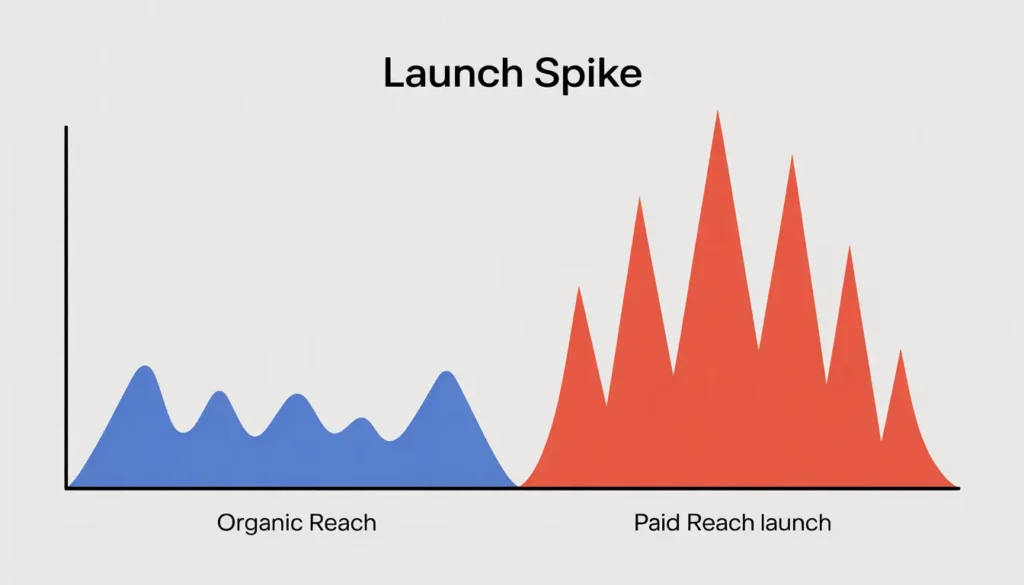
- Time-Sensitive Launches:If you are launching a new product, running a seasonal sale, or hosting an event, you cannot wait for the algorithm to pick up your post slowly. Paid reach ensures your announcement reaches thousands of targeted feeds on the exact day it matters.
- Aggressive Lead Generation: When your goal is to build an email list or fill a webinar, paid reach is the most reliable tool. It lets you use specific “Lead Ads” to capture user information without them even leaving the Facebook app.
- Sales Campaigns:For direct ROI, paid reach is king. Because you can track every dollar spent against each purchase, it’s the primary choice for e-commerce brands looking to scale revenue quickly.
Funnel Stages Ideal for Paid Ads
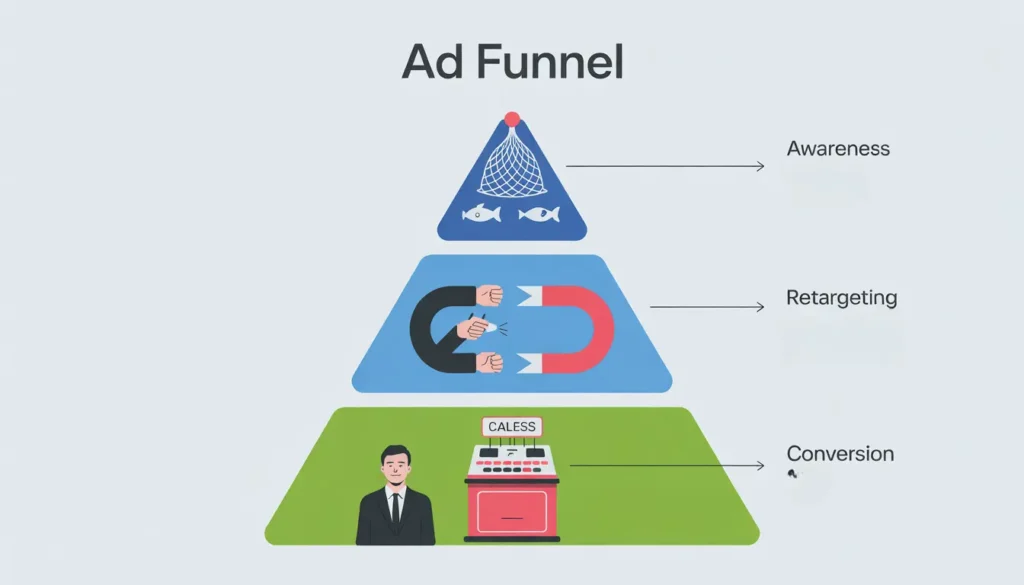
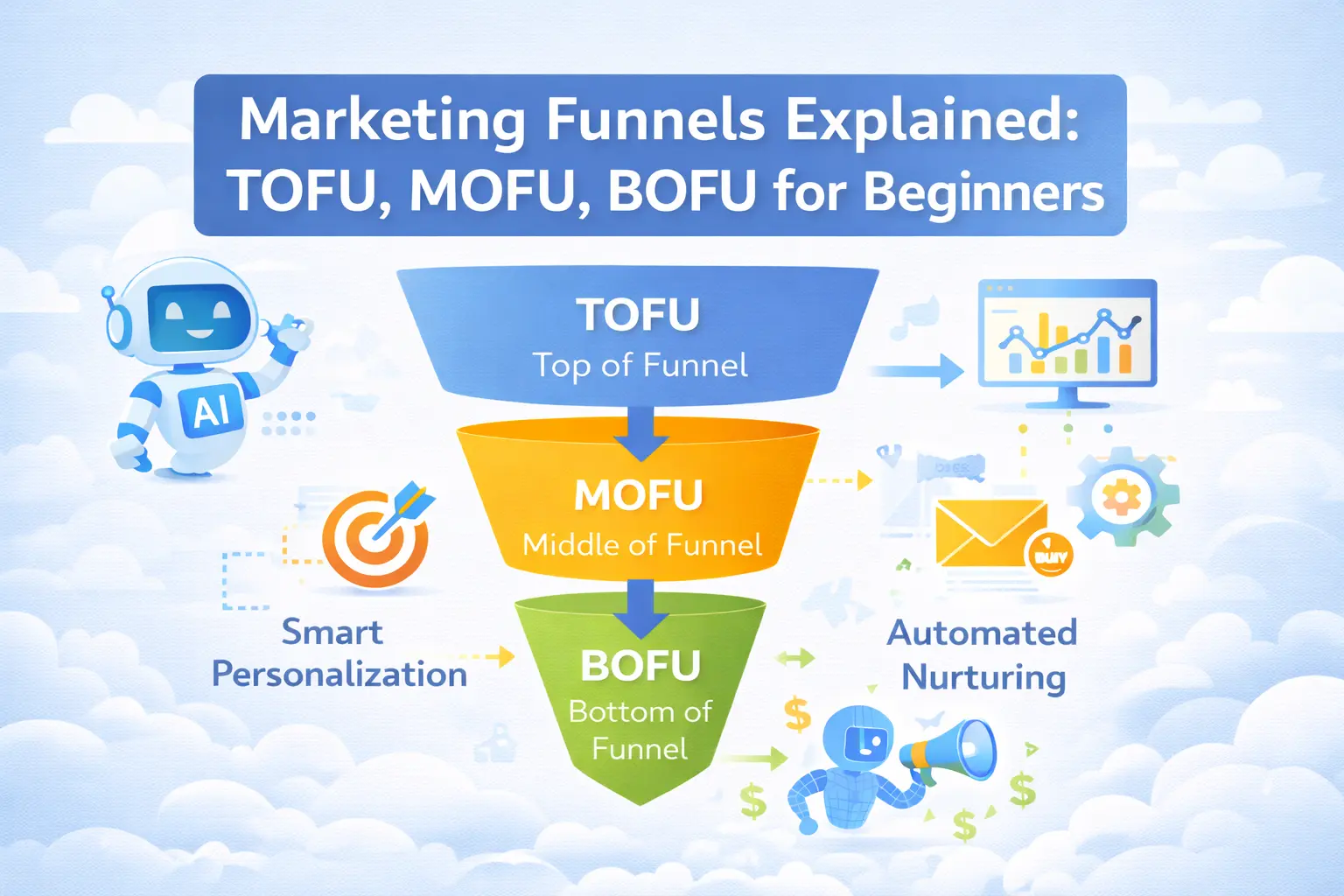
To get the most out of your budget, you shouldn’t just “boost” every post. Instead, align your organic vs paid reach on Facebook with the specific stages of the marketing funnel:
- Awareness (Top of Funnel):Leverage paid advertising to introduce your brand to “cold” audiences who have never heard of you. Since the Facebook organic reach percentage mostly limits you to your existing followers, paid ads are essential for reaching new potential customers and expanding your audience.
- Retargeting (Middle of Funnel): This is the “secret sauce” of paid reach. You can show ads specifically to people who visited your website or engaged with an organic Reel but didn’t buy. This keeps your brand top-of-mind and significantly lowers your cost-per-acquisition.
- Conversion (Bottom of Funnel): When a user is ready to buy, paid ads provide the final “nudge.” Use formats like Carousel Ads or Collection Ads with strong “Shop Now” buttons to drive immediate sales.
Paid + Organic Facebook Strategy (The Smart Hybrid Model)
The most successful marketers in 2026 have stopped treating paid reach vs organic reach Facebook as an “either/or” choice. Instead, they use a hybrid model in which organic content serves as the R&D department and paid ads serve as the scaling engine.
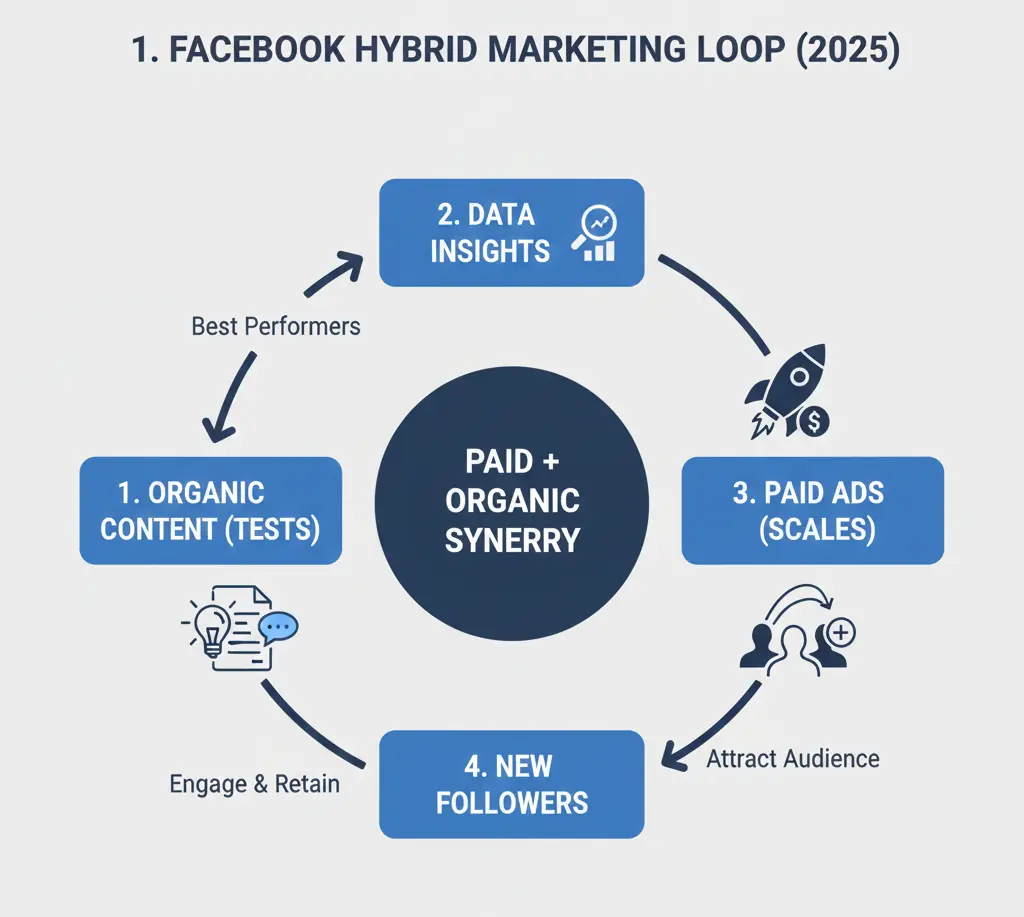
When you combine these two, you create a “compounding effect”: your organic content builds the trust needed for your ads to convert, while your ads reach new audiences that your organic posts can’t reach.
Content-to-Ad Scaling Method
This is the “low-risk, high-reward” way to grow. Instead of guessing which ad will work, let your followers decide.
- Test Organically: Post 3–5 different content types (a Reel, a Carousel, a Poll, and an Image) over a week.
- Scale Winners with Ads: Look at your insights. Which post had the highest “Save” rate or the most “Shares”? Take that exact post and “Boost” it or turn it into an official ad.
- The Result: You are only spending money on content that has already proven it resonates with an authentic audience, significantly lowering your Cost Per Click (CPC).
Retargeting Organic Engagers with Ads
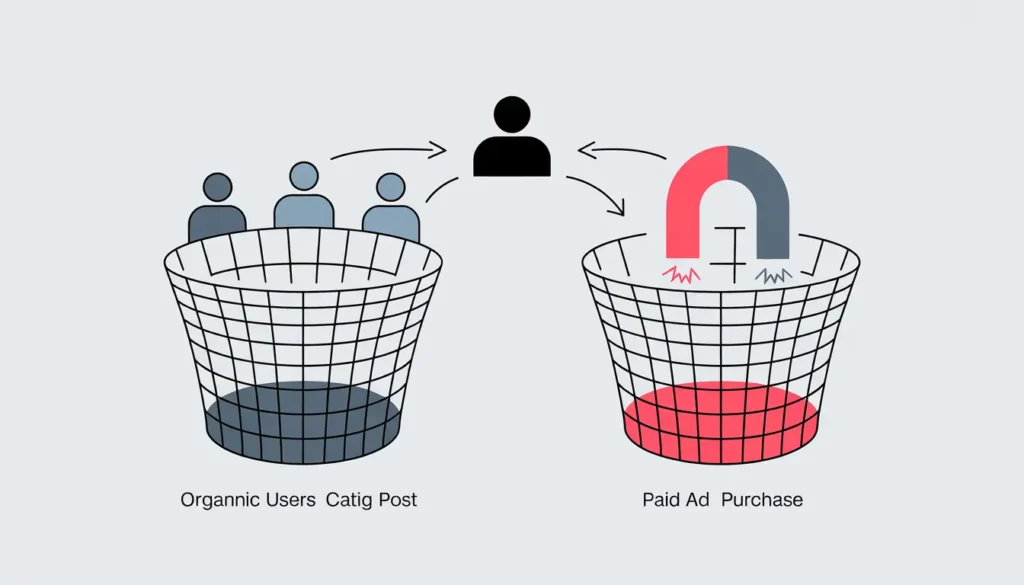
One of the biggest wastes of potential is ignoring people who interact with your organic content but don’t follow you. In 2026, you can use paid reach to “catch” these people.
- Video Viewers: Create a “Custom Audience” of anyone who watched at least 50% of your organic Reels. Show them a “Follow-up” ad with a specific offer.
- Post Engagers: Target people who liked or commented on your organic posts in the last 30 days. These are “warm” leads who are already familiar with your brand.3
- Page Visitors: Show a “Reminder Ad” to people who visited your Facebook Page but didn’t click through to your website.
The Simple Hybrid Funnel
This is the blueprint for a 2026 Facebook strategy that balances organic vs paid reach for maximum ROI:
- Step 1: Organic Content → Engagement
- Goal: Build trust and gather data.
- Action: Post 3 high-value Reels per week focused on solving a problem for your audience.
- Step 2: Paid Retargeting → Traffic
- Goal: Move “warm” users off Facebook and onto your site.
- Action: Run an ad targeting people who engaged with your Reels, sending them to a specific landing page.4
- Step 3: Offer → Conversion
- Goal: Close the sale.
- Action: Use a “Bottom of Funnel” ad (like a discount code or testimonial video) for people who visited your site but didn’t buy.5
Real Examples – Paid vs Organic Reach in Action
Seeing a hybrid strategy in action helps businesses visualize what works, making it easier to replicate for their own campaigns.
Local Business Example
Scenario: A small café wants to increase foot traffic and newsletter sign-ups.
- Organic Effort:
- Posted behind-the-scenes content, daily specials, and community polls
- Built trust and engagement with local followers
- Paid Effort:
- Ran lead generation ads targeting people in the local area who engaged with organic posts
- Boosted top-performing posts to maximize reach
Result: Organic content created credibility, paid ads drove measurable leads and foot traffic.
E-commerce Brand Example
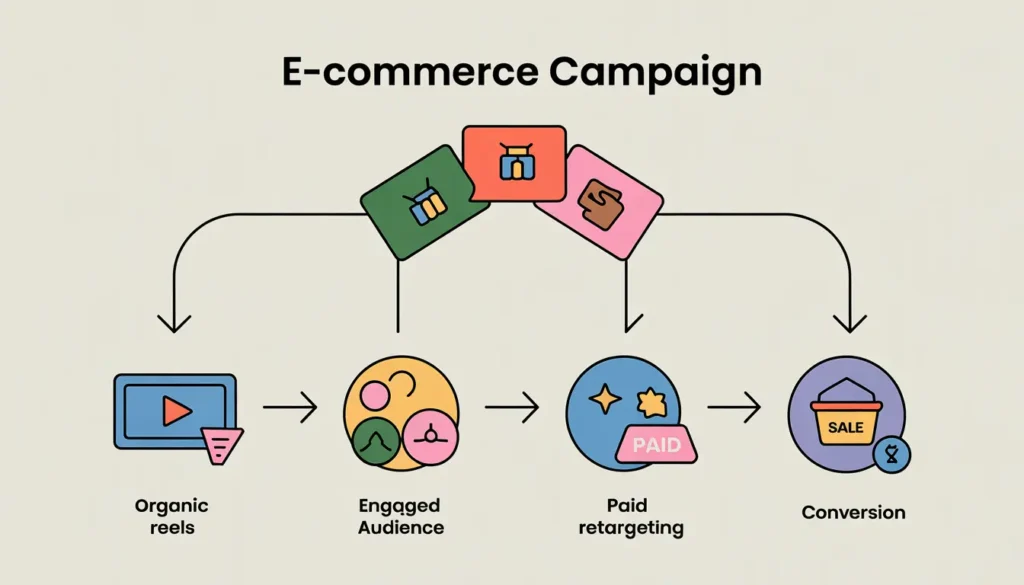
Scenario: An online clothing store wants to increase sales for a new collection.
- Organic Effort:
- Created Reels showcasing new outfits, styling tips, and behind-the-scenes content
- Encouraged shares and saved posts for algorithmic boost
- Paid Effort:
- Retargeted viewers who engaged with Reels and website visitors
- Ran conversion-focused ads for cart abandonment
Result: Organic Reels built engagement and brand awareness, paid retargeting converted warm leads into sales.
- “Common Mistakes Businesses Make” section with images
- “How to Measure Reach Performance” section
- Or move to the conclusion and final verdict
Do you want me to continue with common mistakes next?
Common Mistakes Businesses Make
Navigating the complexities of paid reach vs organic reach Facebook, even experienced marketers can fall into traps that waste budgets and hinder growth. As of 2026, the algorithm has become less forgiving, highlighting the importance of avoiding these four typical mistakes.
Relying Only on Organic Reach
One of the most significant errors is believing that “great content” will naturally reach everyone. Given that the average organic reach on Facebook is about 1.3%, depending only on organic methods leads to stagnation. Without actively using paid reach to promote your message to new audiences, you’re essentially whispering in a packed stadium. Organic strategies are best for nurturing existing audiences; paid methods are necessary for expansion.
Boosting the Wrong Posts
Many business owners hit the “Boost Post” button on content that is already performing poorly, hoping money will fix it. This is a waste of budget.
- The Mistake: Boosting a post because it needs more views.
- The 2026 Fix: Only boost posts that have already achieved a high Facebook organic reach percentage relative to your average. If your followers loved it for free, the broader public likely will, too.
No Retargeting Strategy
If your organic reach vs paid reach plan doesn’t include a bridge between the two, you’re leaving money on the table. A common mistake is using ads only to find “new” people.
- The Missed Opportunity: Not retargeting people who watched your organic Reels or engaged with your posts. These users are “warm” and far more likely to convert than a total stranger.1
No Alignment Between Content & Ads
A significant disconnect occurs when a brand’s organic “voice” is friendly and raw (like behind-the-scenes Reels), but their paid ads are stiff, formal, and overly corporate.
- The Result:Users often experience “brand whiplash.” When paid reach doesn’t seamlessly extend your organic presence, it tends to be dismissed as “spam.” Your ads should resemble your top organic content but include a more obvious Call-to-Action.
How to Measure Facebook Reach Performance
You can’t manage what you don’t measure. In the battle between paid reach vs. organic reach Facebook, data is your most reliable and unbiased source of information. By monitoring the right metrics in 2026, you’ll be able to pinpoint where your average organic reach on Facebook falls short and where your paid advertising offers the greatest return on investment.
Key Facebook Metrics to Track
- Reach:The number of unique people who saw your content at least once. This is the ultimate “awareness” metric. Comparing your Organic Reach to your Paid Reach helps you assess the effectiveness of organic reach vs paid reach for your specific brand.
- Engagement Rate: Calculated as (Engagements / Reach) x 100. In 2025, a healthy Facebook engagement rate is around 1.2%. If your reach is high but your engagement is low, your content isn’t resonating with the people who see it.
- Click-Through Rate (CTR): The percentage of people who clicked your link after seeing your post or ad. For paid ads, a CTR of 1.2% to 2.0% is considered the gold standard for e-commerce and retail.
- Frequency: This is a “paid reach” exclusive. It measures the average number of times each person saw your ad. A frequency above 3.0 often signals “ad fatigue,” so refresh your creative to avoid annoying your audience.
Tools for Tracking & Optimization
- Meta Business Suite:Your comprehensive dashboard. It allows you to monitor your Facebook organic reach percentage and the performance of basic boosted posts. Ideal for small business owners seeking a quick overview of their “social health.”
- Ads Manager: The “Command Center” for paid reach. It provides granular data that Business Suite misses, such as “Cost Per Result,” “Video Retention Curves,” and “Conversion Path” tracking.
- GA4 (GoogleAnalytics 4): Essential for seeing what happens after the click. Use UTM parameters in your Facebook links so GA4 can tell whether your Facebook traffic actually buys products or bounces from your site.
Facebook Reach in 2026 and Beyond
The future of paid reach vs organic reach Facebook is no longer a competition between “free” and “paid.” Instead, it is a unified ecosystem powered by sophisticated artificial intelligence. In 2026, the algorithm has evolved from a simple chronological feed into a complex Discovery Engine that prioritizes value and relevance above all else.
Algorithm & Platform Trends
As we look toward 2026, the Facebook algorithm is shifting its focus from “who you follow” to “what you enjoy.”
- Discovery-Based Feed: Currently, nearly 30-50% of the content in a user’s feed is recommended by AI from accounts they don’t follow. This means your Facebook organic reach percentage is less about your follower count and more about your content’s ability to grab attention in a crowded marketplace.
- Meaningful Conversations: The “Engagement” signal has changed. Facebook now places greater value on “long-form comments” (more than four words) and on shares via private messaging (Messenger/WhatsApp) than on simple likes.
- Video-Default Platform: By the end of 2026, almost all video uploads will be treated as Reels. Vertical, short-form video is now the “native language” of the platform.
AI, Automation & Smarter Ads
Meta’s AI, known as Llama 3 (and its successors), has fundamentally changed how businesses manage their paid reach vs organic reach. Automation is no longer an “option”; it is the default setting for success.
- Predictive Delivery: Facebook’s AI now uses over 100 different prediction models to forecast which users are most likely to click or buy before they even see your ad. This “Predictive Meta Ad Optimization” reduces wasted spend by delivering your message only to high-intent users.
- Creative Optimization (Advantage+): You no longer need to test 50 different headlines manually. Meta’s AI can now take your basic assets and automatically generate dozens of variations, swapping backgrounds, rewriting copy, and adjusting brightness to see which version performs best for each user.
- Audience Automation:In 2026, “broad targeting” often outperforms narrow, manual interest targeting. By providing just a few “audience hints,” you enable the AI to find your customers based on real-time behavior rather than static demographics such as age or zip code.
Final Verdict – Paid Reach vs Organic Reach Facebook
In 2026, the debate over paid reach vs organic reach Facebook has reached a definitive conclusion: neither can survive alone. As the platform transitions into an AI-driven discovery engine, your strategy must evolve from choosing one to mastering the synergy of both.
Organic = Trust + Consistency
Organic reach is no longer your primary growth lever, with the average organic reach on Facebook now at a humble 1.2% to 1.6%; its role has shifted.
- The Purpose: It serves as your “digital storefront” and credibility anchor.
- The Goal:When users click on a paid ad, they typically visit your Page first. Regular organic content, especially Reels and Stories, shows that you are an active, trustworthy brand. It helps convert “reached users” into a loyal community.
Paid = Speed + Scale
If organic is the engine, paid reach is the high-octane fuel.
- The Purpose: To bypass the strict Facebook organic reach percentage and place your message exactly where it needs to be.
- The Goal:Use paid ads for “aggressive” objectives, lead generation, flash sales, and new product launches. In 2026, leveraging Advantage+ automation enables the AI to find your buyers faster than any manual organic effort could.
Hybrid = Predictable Growth
The “Smart Hybrid Model” is the only way to achieve predictable results in the current landscape.
- Test with Organic: Use your Page to post “raw” content and Reels.
- Scale with Paid: When an organic post sees a spike in “Saves” or “Shares,” put a budget behind it.
- The Result: You create a self-sustaining funnel where organic content builds the warm audience that your paid ads then convert into customers at a much lower cost.
Conclusion
By 2026, mastering paid reach vs organic reach Facebook is no longer about selecting one over the other; instead, it’s about integrating both strategies. The days of “accidental” organic virality have mostly ended, giving way to advanced AI-driven discovery systems that prioritize quality content and those who invest strategically in paid promotions.
Recap: Key Takeaways
- Organic reach is your foundation: It builds the trust, authority, and community required to turn a stranger into a customer. While the average organic reach on Facebook is low, its value in establishing social proof is irreplaceable.
- Paid reach is your accelerator: It allows you to bypass algorithm gatekeepers, providing the speed and scale necessary for launches, lead generation, and aggressive sales goals.
- The Hybrid Model wins: By testing content organically and scaling the “winners” with paid ads, you minimize financial risk and maximize ROI.
Strategy Over Guessing
The biggest mistake you can make in 2026 is “guessing” what your audience wants. Use the abundant data available through Meta Business Suite and Ads Manager. Avoid posting just for the sake of posting; instead, ensure each Reel, image, and ad serves a clear purpose within your marketing funnel.
When you move from a “hoping for reach” mindset to a strategy-first approach, you stop fighting the algorithm and start making it work for you.
FAQs – Paid Reach vs Organic Reach Facebook
1. Is Facebook’s organic reach dead in 2026?
No, Facebook organic reach isn’t dead, but it is limited. The average organic reach on Facebook is much lower than before due to algorithm changes and a pay-to-play environment. Organic still works for building trust, driving engagement, and warming audiences, but it’s no longer enough on its own to drive fast growth.
2. What is the average organic reach on Facebook today?
For most business pages, the average organic reach on Facebook is 2%–6% of total followers. Reels and highly shareable content can exceed this, while static posts often perform below average.
3. Should small businesses focus on paid reach or organic reach?
Small businesses should start with organic reach to build credibility, then gradually add paid reach to scale. The most effective approach is a hybrid model in which organic content is tested first, and high-performing posts are amplified with ads.
4. Is boosting posts the same as running Facebook ads?
Not exactly. Boosted posts are simplified ads with limited targeting and optimization. Facebook Ads Manager offers greater control, targeting, and conversion tracking, making it more effective for serious lead-generation and sales campaigns.
5. Can paid reach work without organic content?
Paid reach can drive traffic and sales without organic content, but it’s more expensive and less trusted. Organic content improves ad performance by warming audiences, increasing engagement, and lowering costs, making paid campaigns more profitable.